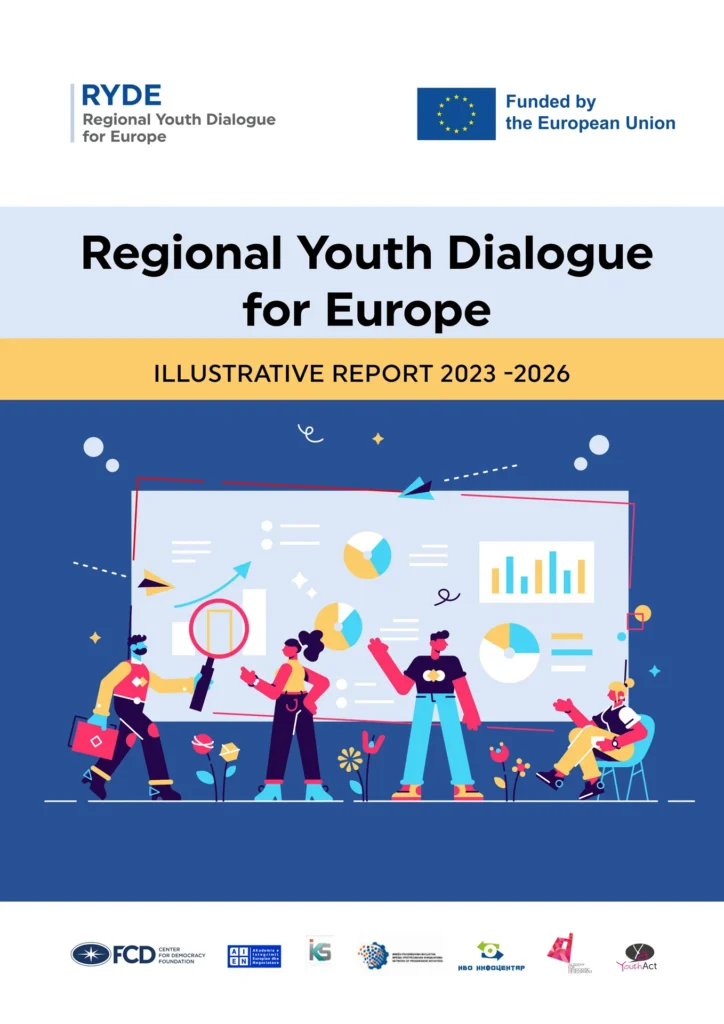
“Regional Youth Dialogue for Europe” – supported by the European Union
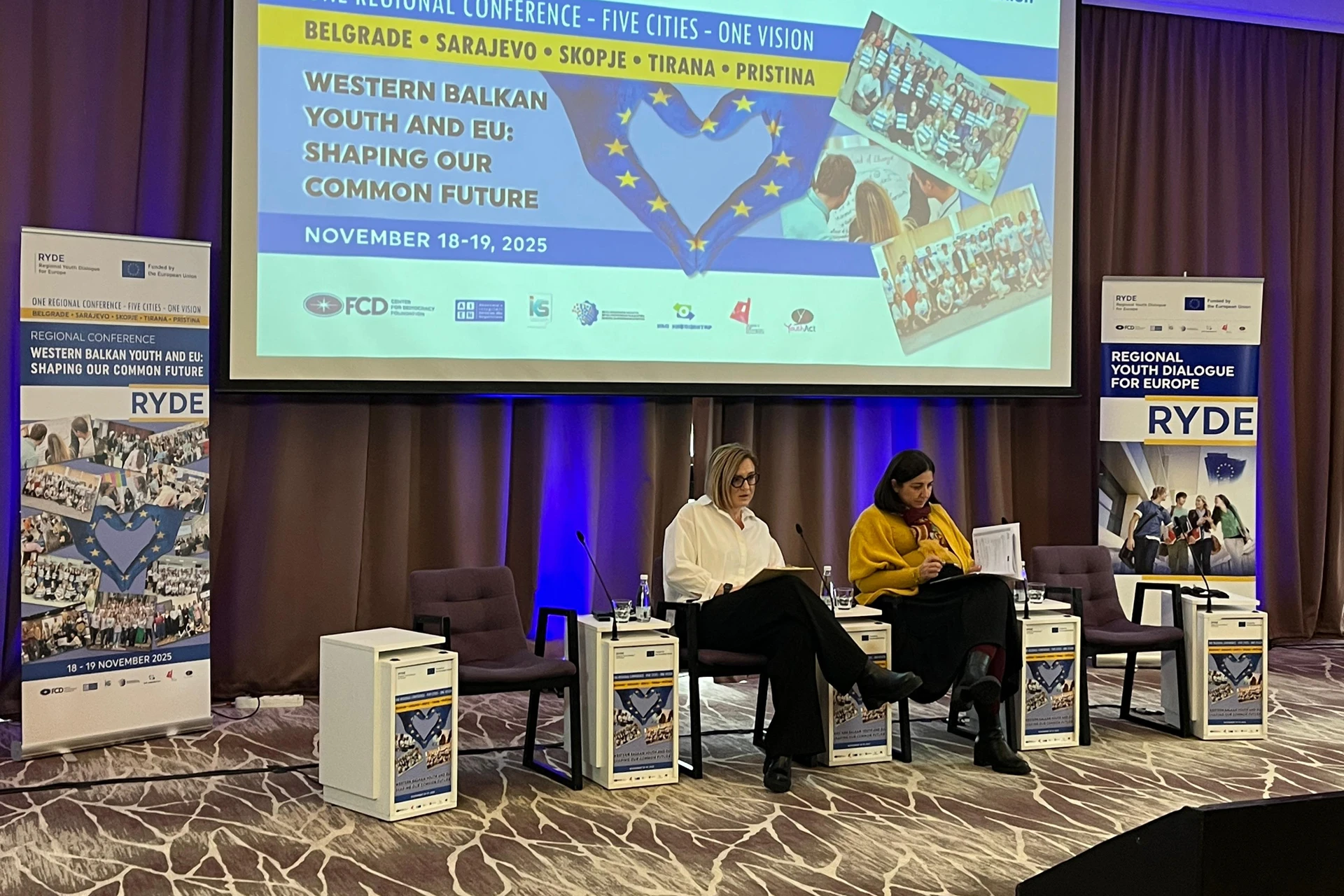
One regional conference – five cities – one vision:
Belgrade · Sarajevo · Skopje · Tirana · Pristina
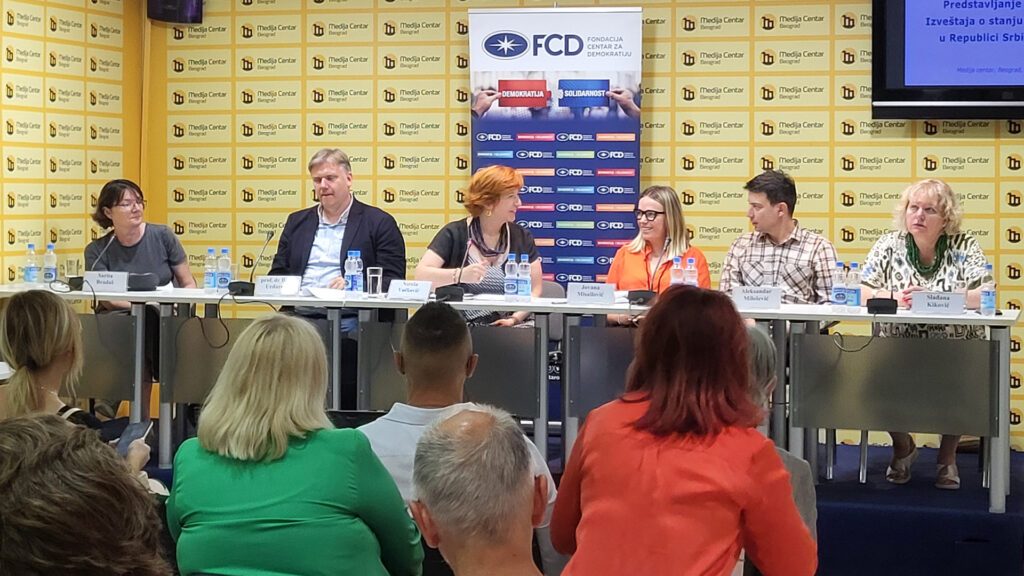
We Are Shaping Our Shared Future — this was the theme of the two-day regional conference “Youth of the Western Balkans and European Union”, held as part of the project “Regional Youth Dialogue for Europe – RYDE” (2023–2026), organized by the Center for Democracy Foundation in cooperation with partner organizations from across the Western Balkans and with the support of the European Union.
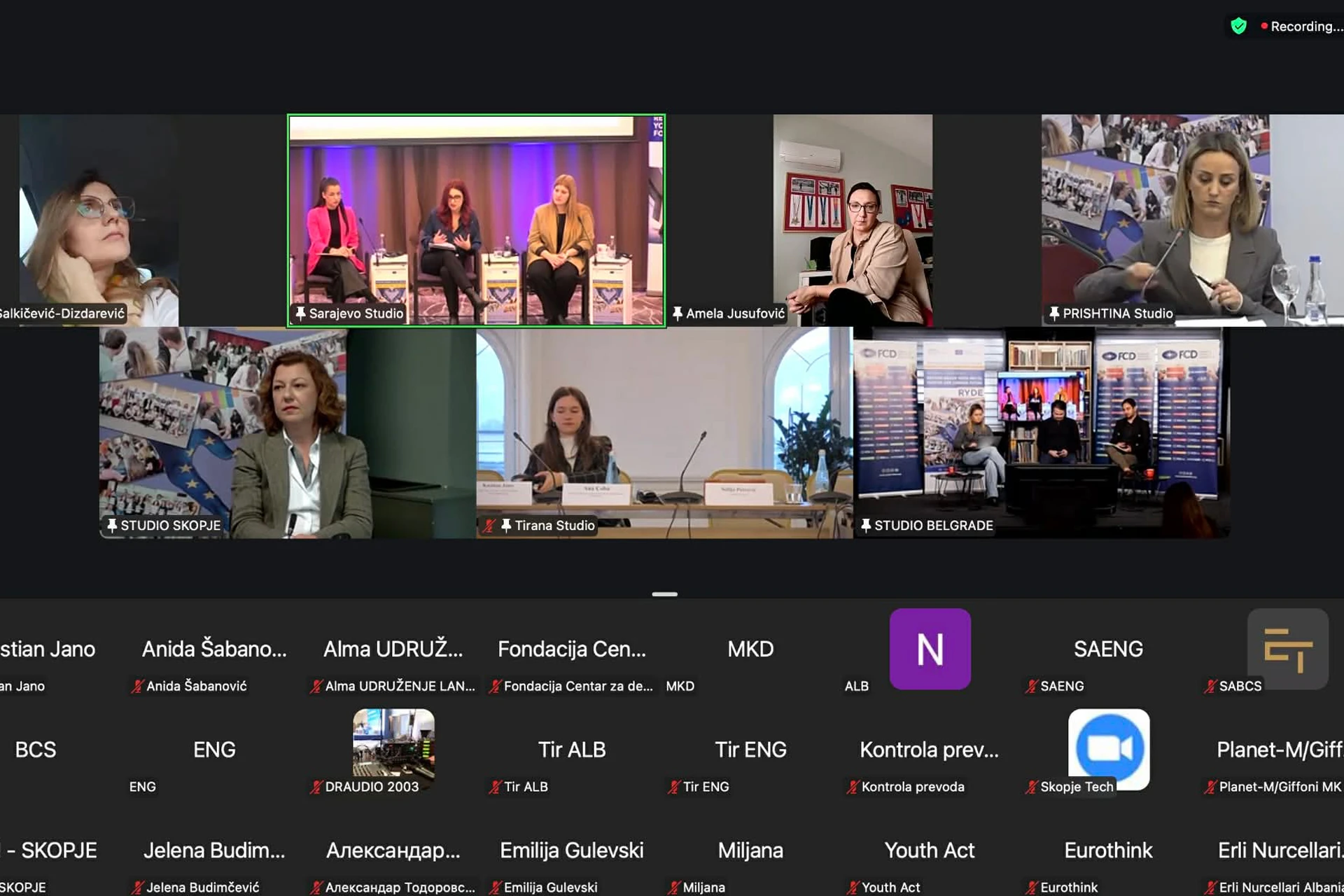
The gathering took place on 18–19 November 2025, bringing together voices from five cities — Belgrade, Sarajevo, Tirana, Skopje, and Pristina — for a regional conference featuring inspiring speakers, dynamic panel discussions, and youth-led initiatives.
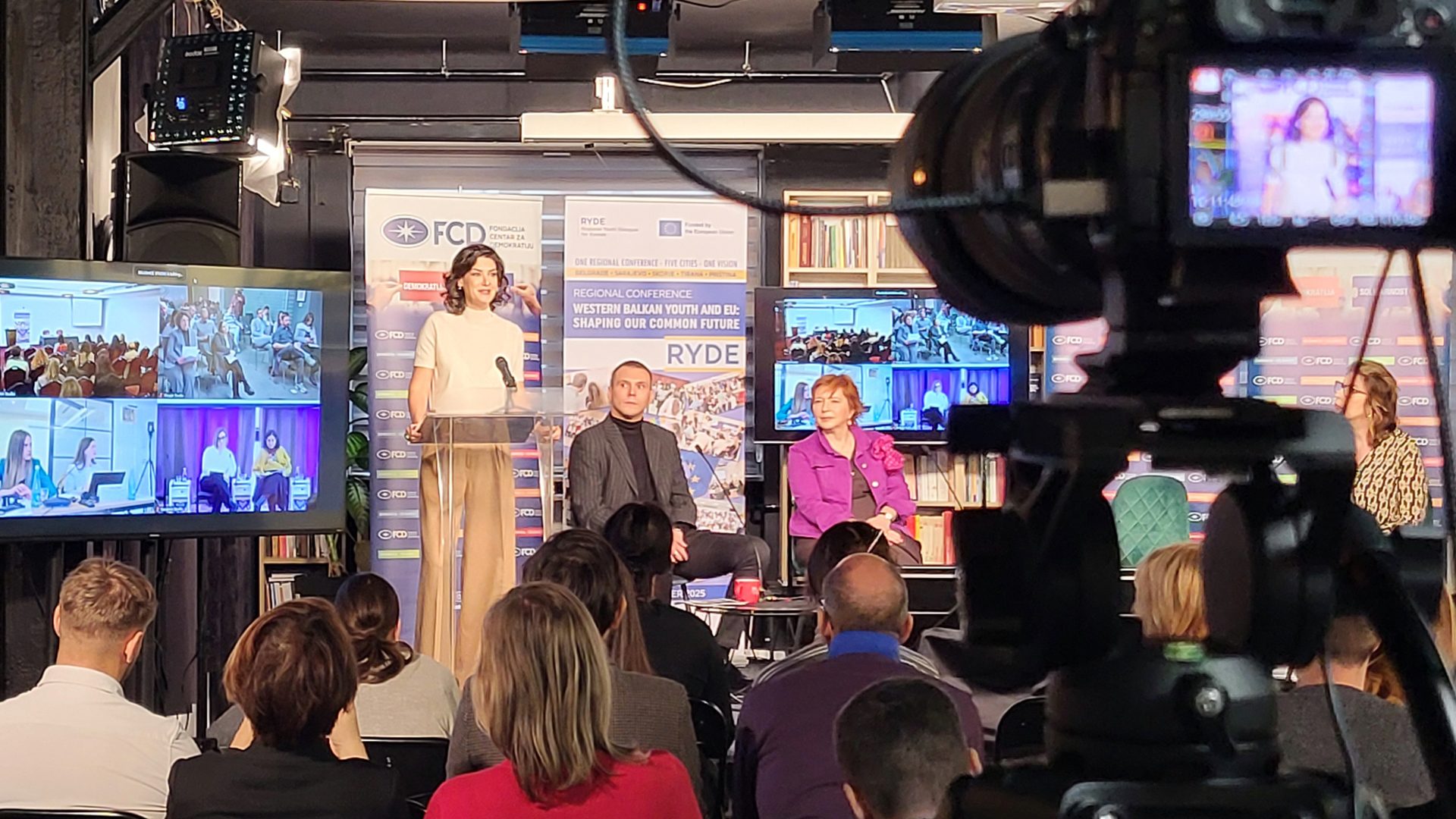
Opening the conference, Plamena Halačeva, Deputy Head of the EU Delegation to Serbia, emphasized that the European Union recognizes the many challenges facing young people today — from economic insecurity and social inequalities to the growing impact of climate change. She stressed that dialogue is where progress begins, noting that young people must come together and remain open, honest, and eager to learn from one another.
Nataša Vučković, Secretary General of the Center for Democracy Foundation, underscored that young people must be recognized as drivers of change, noting that they embody European values in their expectations — and now more than ever, they stand up for those values with clarity and courage. The Western Balkans are part of Europe, she said, and will become even more so through stronger democracy, improved rule of law, and better protection of human rights.
In a video address, Serbia’s Commissioner for the Protection of Equality, Brankica Janković, encouraged young people to dream bigger than the opportunities currently offered to them, stressing that they understand economic security, the rule of law, and the eradication of corruption as key priorities.
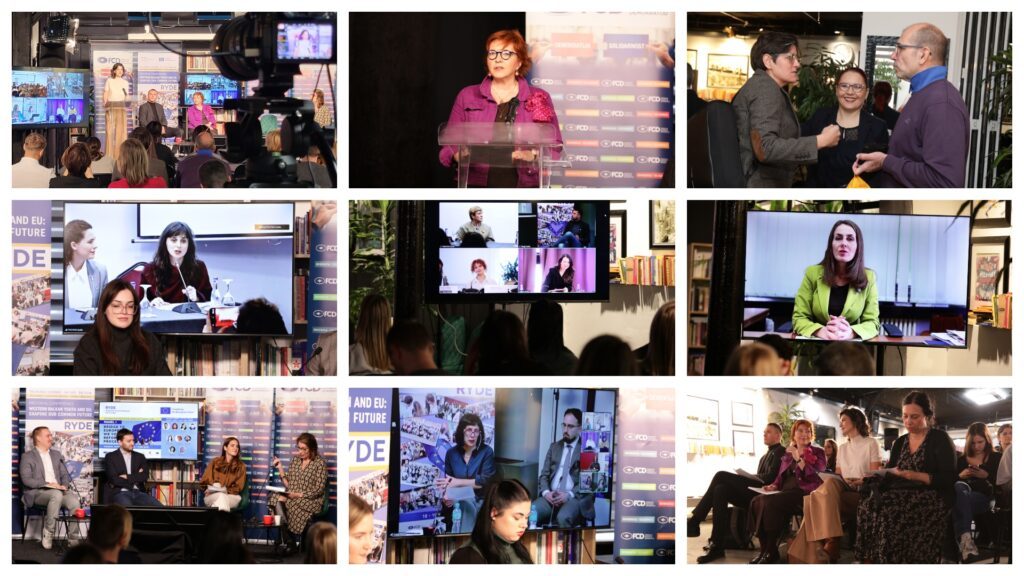
The regional conference brought together young people, policymakers, civil society representatives, experts, and other stakeholders from across the Western Balkans to present the priorities and challenges faced by youth in the European integration process, to foster mutual understanding, and to highlight examples of good practice from the Western Balkans and the European Union. Discussions focused on public policy, advancing reforms, and shaping a common European future.
The goal of the conference was to amplify the voice of young people at local, national, regional, and European levels, encouraging dialogue on reforms that affect the younger generation.
Key topics were explored through five panel discussions: A Bridge to Europe – Western Balkan Youth in Reform Processes; Youth Employment in the Age of Artificial Intelligence: The Youth Guarantee in the Western Balkans – Challenges and Opportunities; Youth Well-being in Focus: Health, Housing, Culture; Young People in the Digital Landscape: Safety, Trust, and Resilience; Youth and Nature: A Partnership for a Sustainable Green Future.

The conference was held as part of the project “Regional Youth Dialogue for Europe – RYDE” (2023–2026), supported by the European Union and implemented by the Center for Democracy Foundation in cooperation with partner organizations from across the Western Balkans.
Center for Democracy Foundation
Regional Conference “Western Balkan Youth and the European Union: Shaping Our Common Future” (Opening)
Nataša Vučković – Western Balkan Youth and the European Union
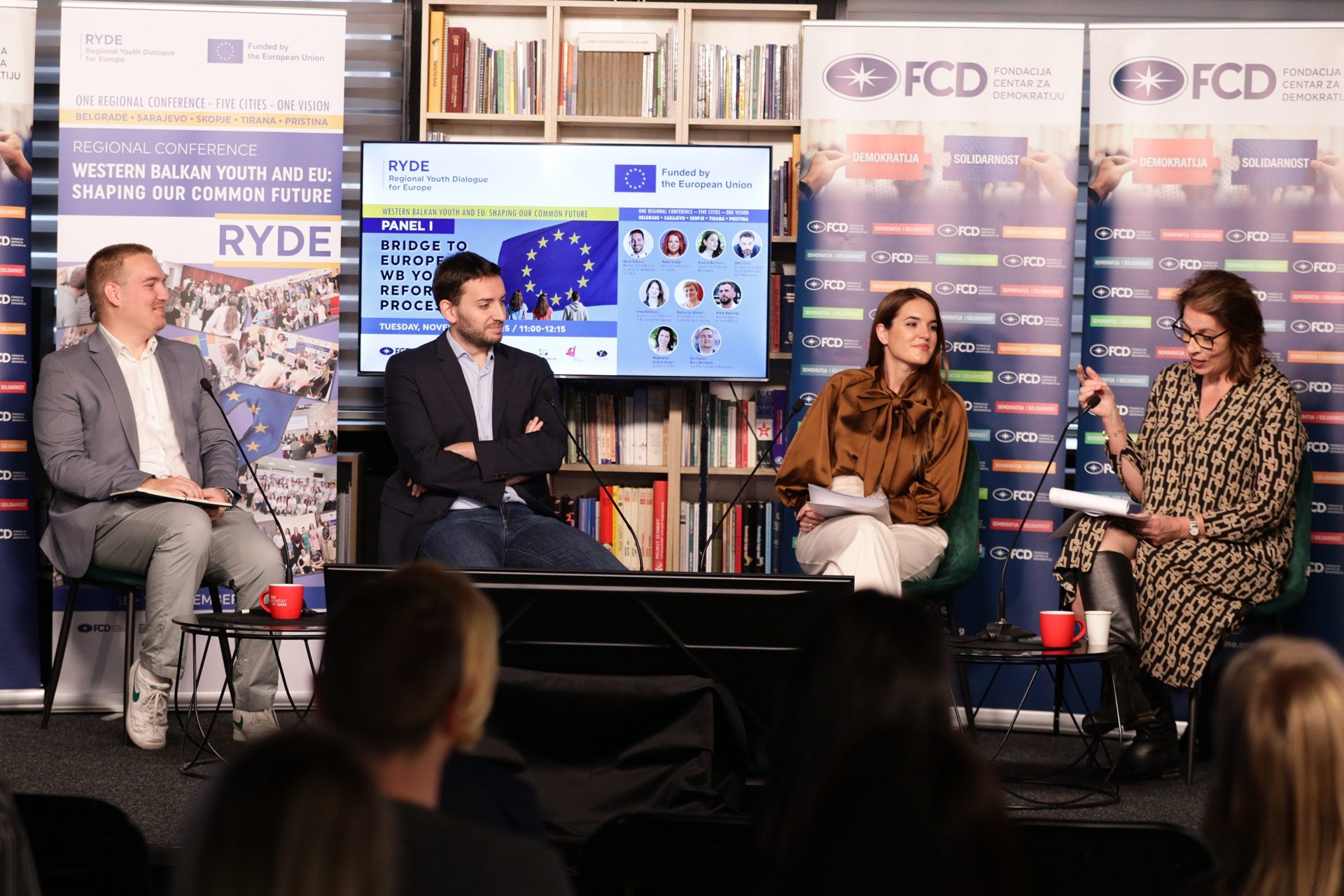
Panel I – Bridge to Europe: Western Balkans Youth in Reform Processes
Coordinator: Center for Democracy Foundation, Belgrade, Serbia
Moderator: Ljubica Gojgić, Journalist, Serbia
Facilitator: Boris Kaličanin, Youth Policy Expert & Researcher, Faculty of Political Science, Serbia
Panelists:
- Pavle Grbović, Member of the National Assembly of the Republic of Serbia, Movement of Free Citizens
- Maša Vračar, National Youth Council of Serbia
- Ksenija Borilović, Senior Adviser for Cooperation with NGOs and for Coordination and Implementation Affairs, Capital City Podgorica, Montenegro
- Emir Ćorić, Policy and Community Engagement Officer, European Association for Local Democracy, North Macedonia
- Irma Rešidović, General Secretary, Youth Council of Federation of Bosnia and Herzegovina
- Dashurije Ahmeti, Directorate of Culture, Youth and Sports (DCYS), Kosovo
- Klark Radoniqi, Program Director, National Agency of Youth Albania
- Presentation of the project “School Student Lab (SSL) – Enhancing Youth Activism on Local and National level” by the Union of High School Students from Belgrade, supported within the RYDE project
RECOMMENDATIONS:
- Establish parliamentary (sub)committees and councils for youth policy, enabling for greater accountability and transparency in youth policy through legislative and oversight functions of the parliament, including the possibility of organizing public hearings and other formats that involve youth in decision-making processes
- Increase the number of local youth councils in the WB region, and provide legal basis for more inclusive local, regional and national youth councils that should have 50% of youth membership.
- Establish EU Youth Dialogue implementation bodies/working groups at the national level with appropriate human and financial capacities for its work
- Include Youth Test in national public policy planning system, enabling youth with greater participation in the creation of public policies and laws
- Maintain and expand the youth participation in key regional and European deliberative spaces such as Berlin process, RYCO, etc.
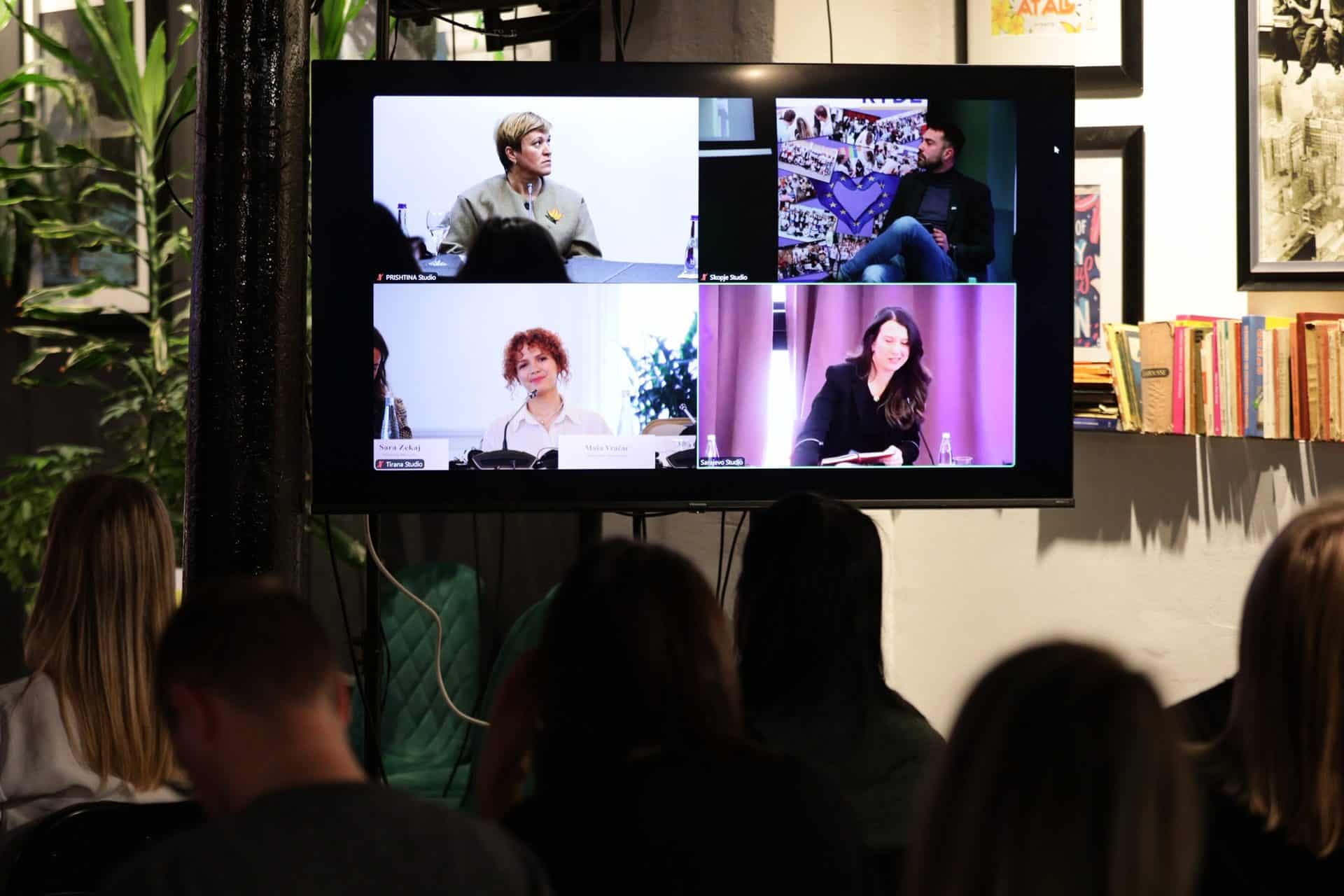
Panel II – Youth Employment in AI Era: Youth Guarantee in the Western Balkans – Challenges and Opportunities?
Coordinator: Kosovar Stability Initiative, Pristina, Kosovo
Moderator: Brikena Berisha, Researcher, Kosovo
Facilitator: Erblin Ajdini, Civil Society Activist, Kosovo
Panelists:
- Sajmira Kopani, International Labour Organization, Kosovo
- Anil Gashi, Employment Agency of RKS
- Sara Zekaj, Partnership Officer, YPN, Albania
- Mariana Angelova, Secretary General of National Youth Council of Macedonia
- Ljiljana Pandžić, EU Delegation to Bosnia and Herzegovina
- Jovan Protić, Coordinator, International Labour Organization, Serbia
- Presentation of the project „Youth Action for EU Integration: Advocating the Youth Guarantee Implementation Plan” by the PROI – Progressive Reinforcement of Organizations and Individuals from Sarajevo, supported within the RYDE project
RECOMMENDATIONS:
- Increase capacities of young beneficiaries to ensure processes match their needs
- Strengthen institutional capacities, especially in human resources
- Improve outreach mechanisms, particularly for rural and isolated youth
- Promote cooperation between local and national institutions to simplify access
- Engage local organizations that have strong community presence
- The private sector must be treated as an essential contributor to the YG ecosystem
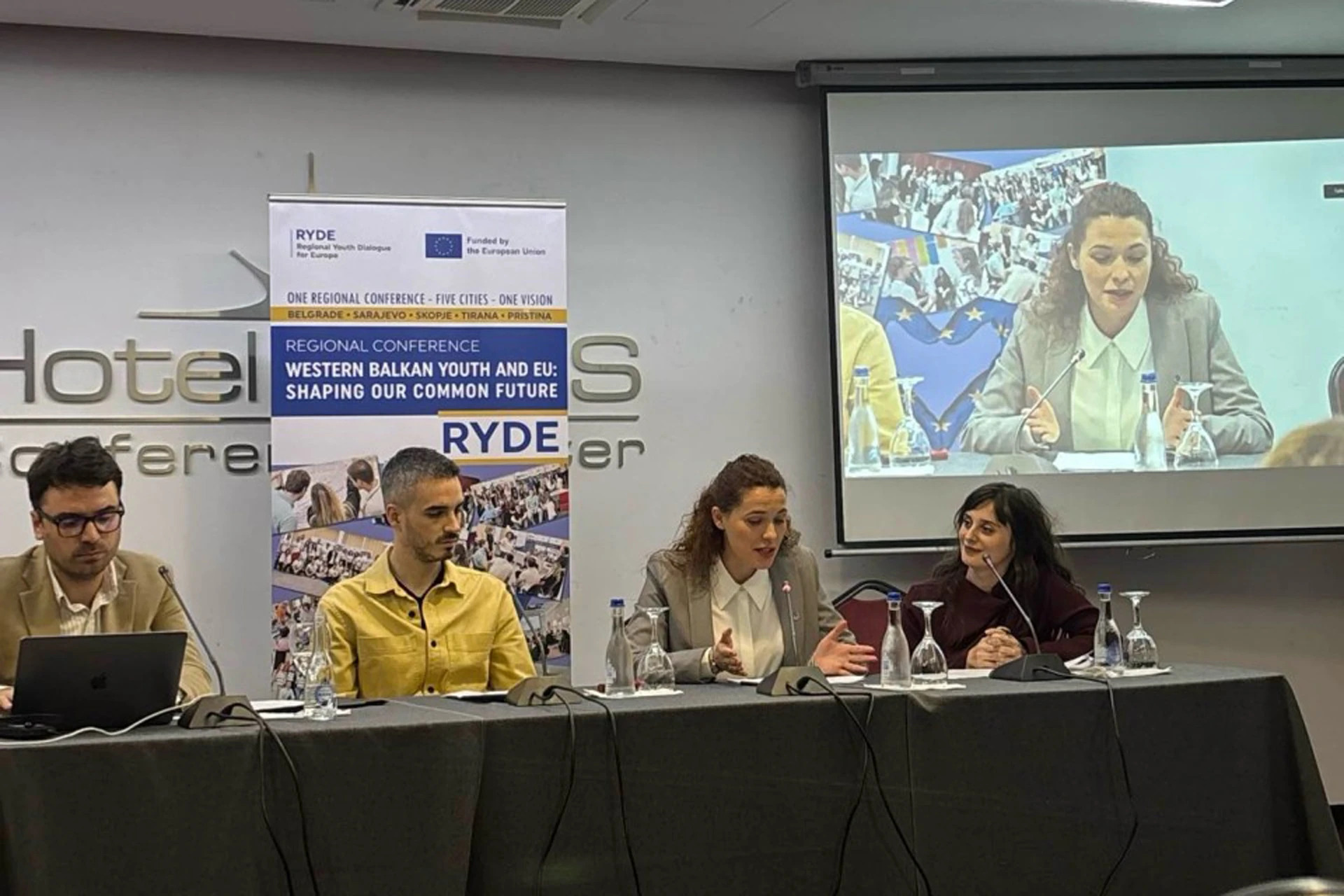
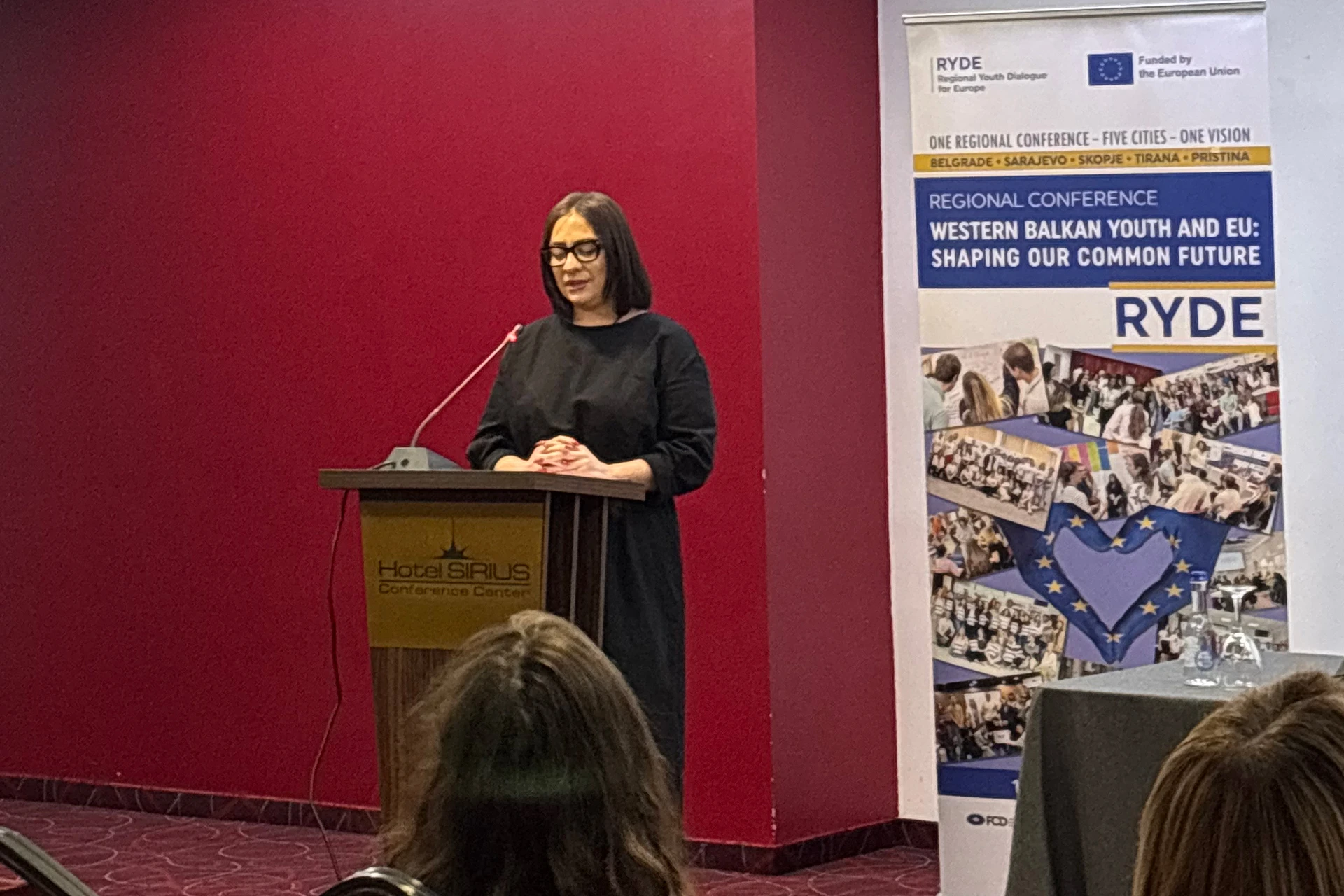
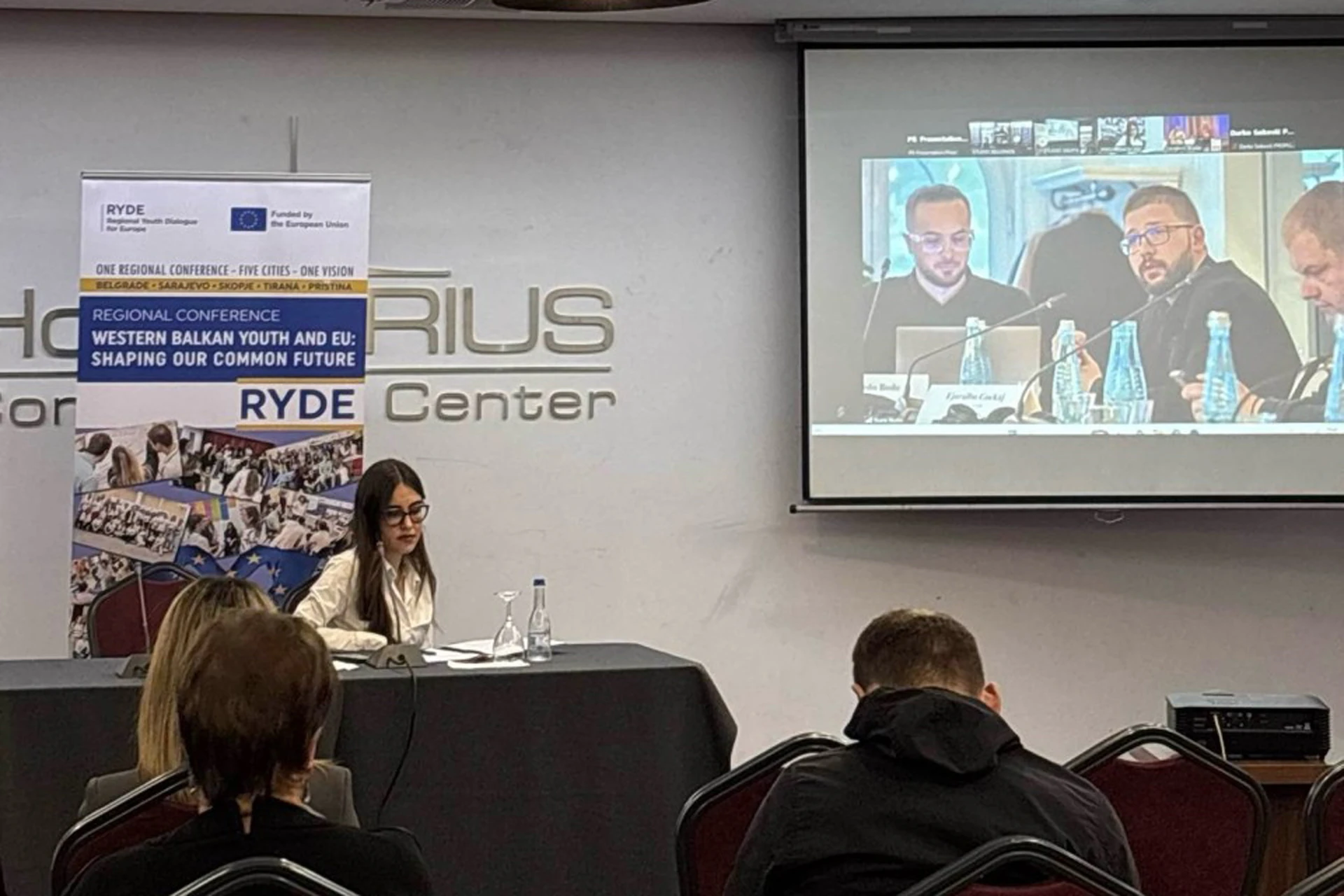
Panel III – Youth Well-being in Focus: Health, Housing, Culture
Coordinator: NGO Info Center, North Macedonia
Moderator: Ana Zafirova, Communication Expert, N. Macedonia
Facilitator: Biljana Dukovska, Macedonian Anti-Poverty Platform, N. Macedonia
Panelists:
- Lejla Mehmedi, Ministry of Social Policy, Demography and Youth of North Macedonia
- Dragana Karovska, HERA-Health Education and Research Association, N. Macedonia
- Nadica Skeparoska, Master of Science in Clinical Psychology, Certified Psychotherapist in Transactional Analysis, N. Macedonia
- Mehmet Salihu, Civil Society Activist, Breathe Freely campaign, Kosovo
- Katarina Vučković, Expert in Youth Work and Leadership, Bosnia and Herzegovina
- Vukašin Grozdanović, OPENS, Serbia
- Doralda Tanellari, Sociologist and Project Coordinator, Albania
- Presentation of the project „Red Lines” by Teodora Mileska from Informal Group Red Lines, supported within the RYDE project
RECOMMENDATIONS:
- Health – Designing youth-friendly health services with an integrated approach, combining mental health, sexual and reproductive health, and health education, should be a collaborative effort among young people, institutions, and the professional community. These services should be free, confidential, delivered by multidisciplinary teams, and aimed at reducing stigma and discrimination among young people.
- Housing – National and local governments should commit to developing sustainable and affordable housing models that foster social inclusion and social development. Through open dialogue, young people, municipalities, and civil society organizations should co-create solutions that link housing, the green transition, and quality of life. The future of housing should be grounded in democratic participation of stakeholders, accountability in urban planning, and environmental responsibility.
- Culture – Young people need an accessible, inclusive, and European-aligned cultural environment that both preserves cultural diversity and supports the development of a shared European identity. This approach enables young people to actively participate in cultural life and feel included and represented. Youth should have a meaningful role in shaping cultural policies, through youth cultural councils, joint working groups, and transparent, timely public consultations.
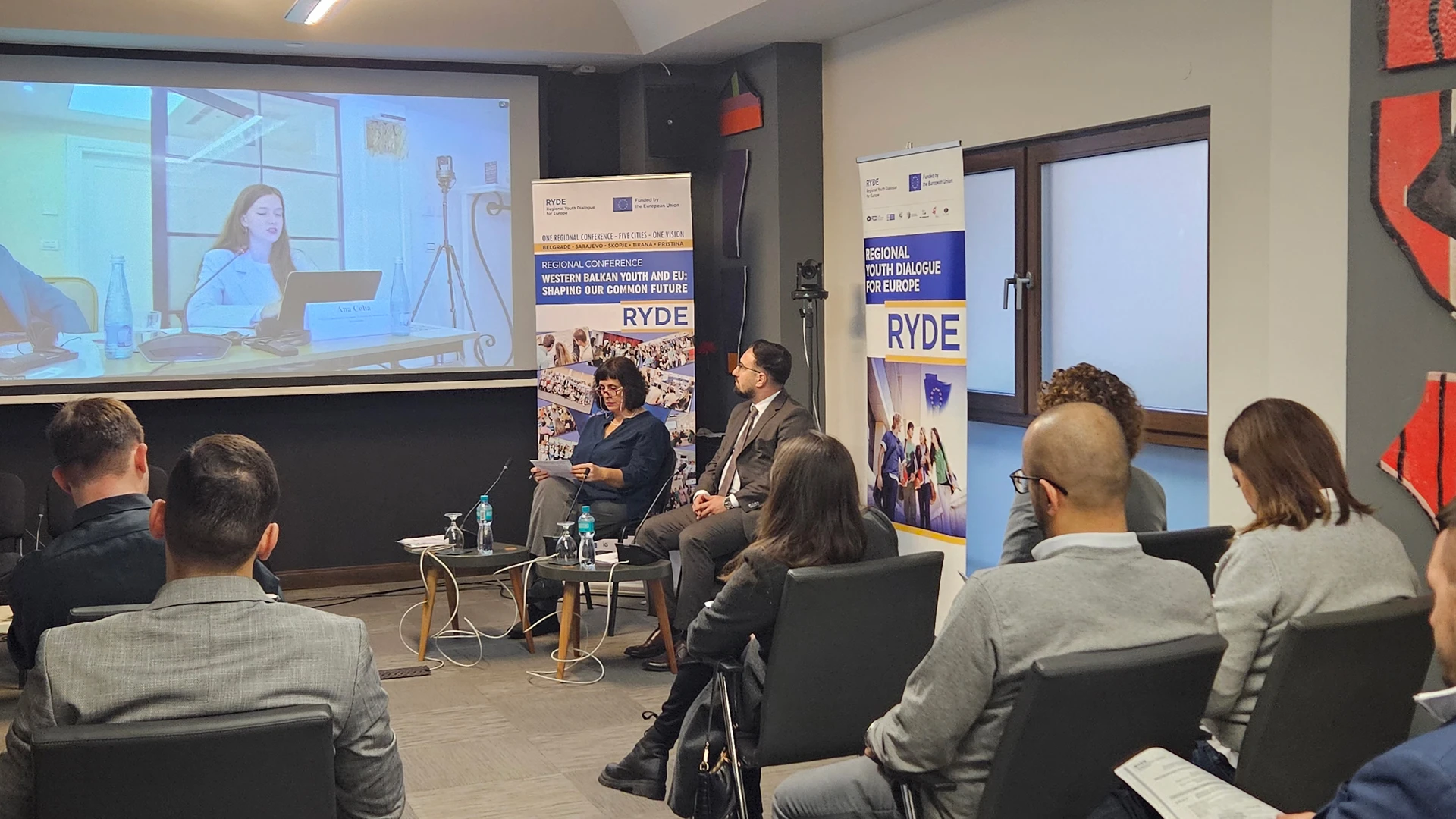
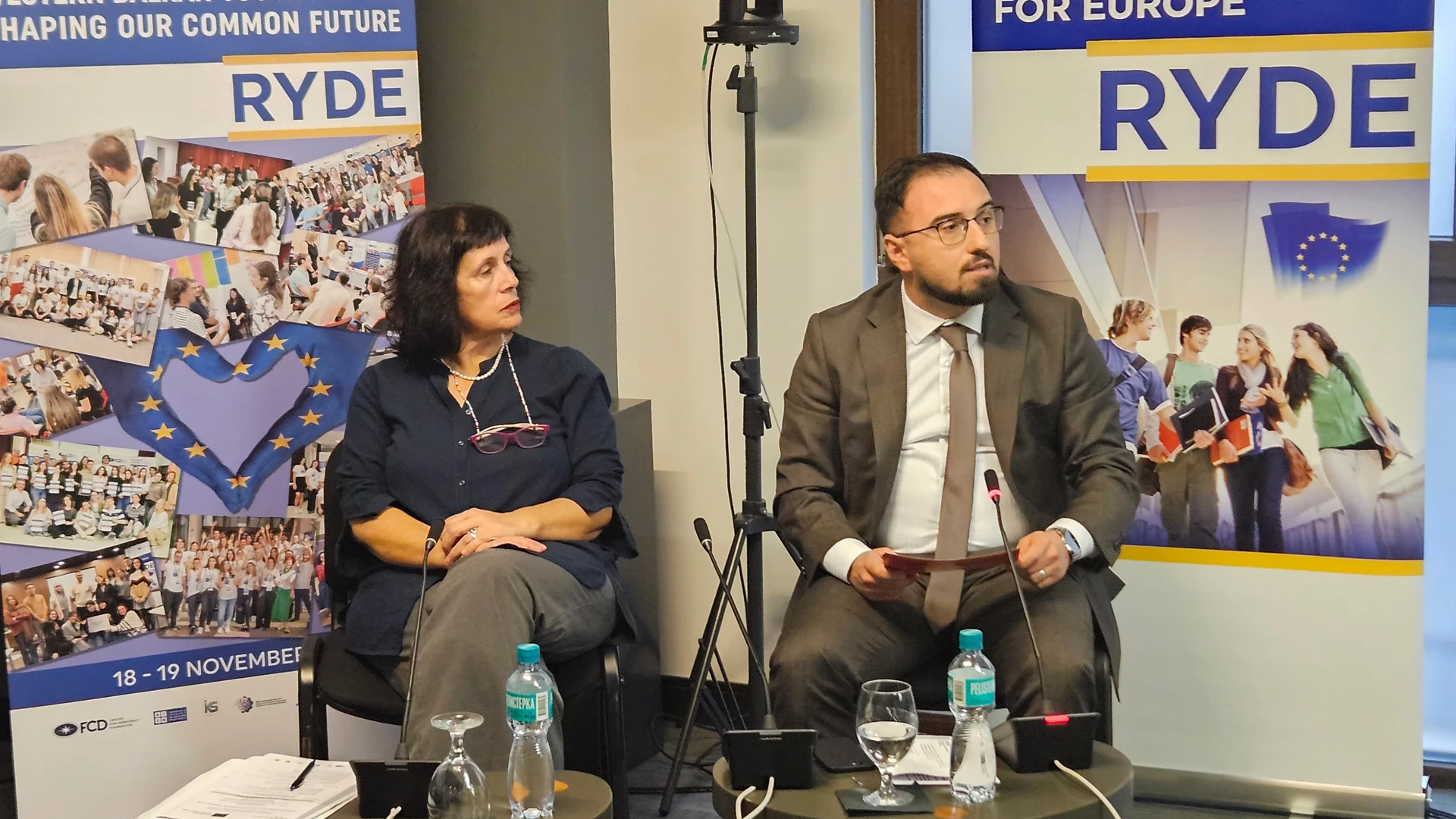
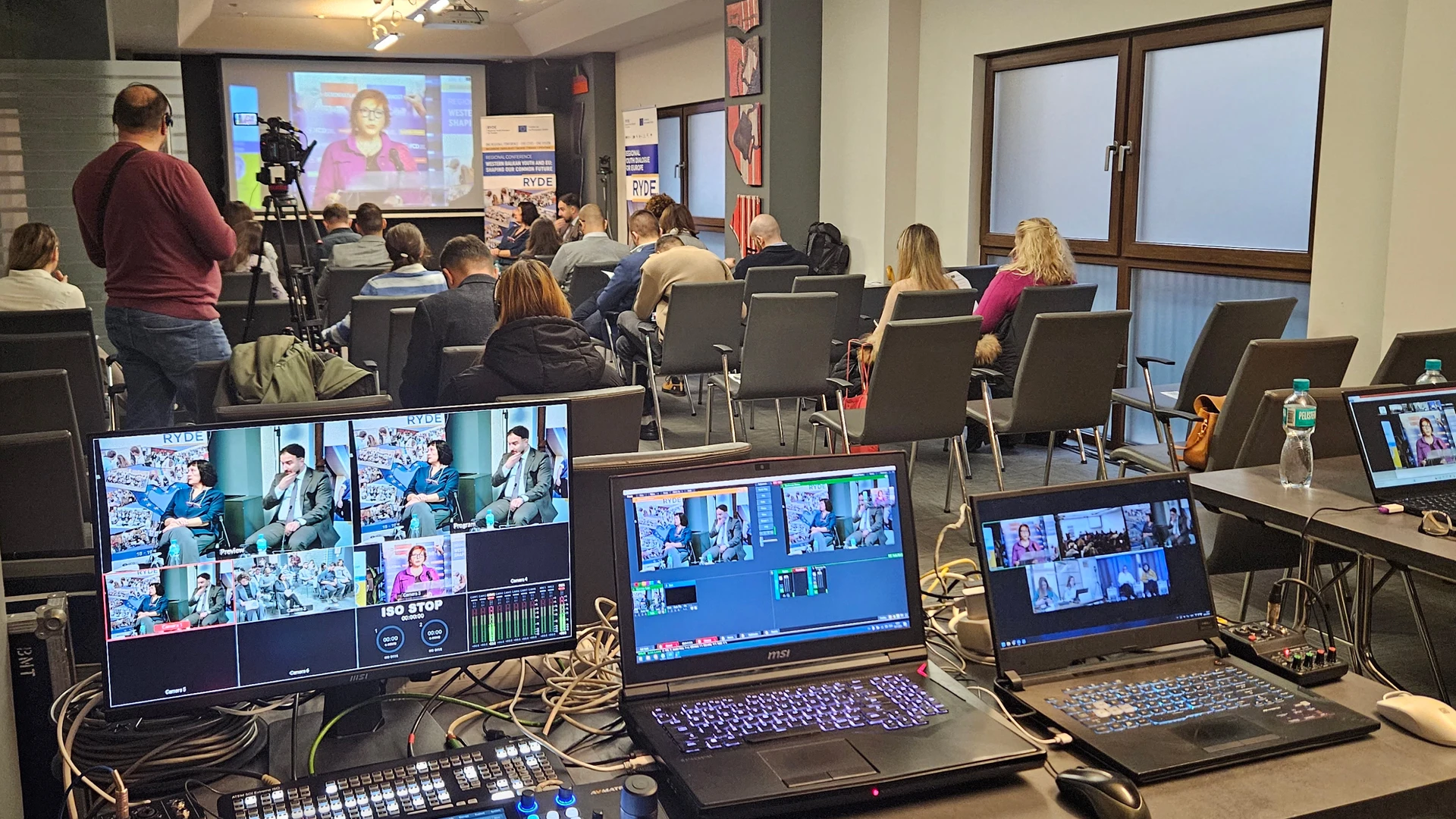
Panel IV – Youth in the Digital Landscape: Security, Trust and Resilience
Coordinator: Academy of European Integration and Negotiations, Albania
Moderator: Lutjona Lula, Development Communication Officer, Albania
Facilitator: Fjoralbo Gockaj, Researcher AIEN, Albania
Panelists:
- Armando Bode, Advisor SciDev, Albania
- Sead Dzigal, Communications Asst. Prof. at International Balkan University, N. Macedonia
- Mirela Biković – Blagovčanin, Social media manager, PitchSee, Bosnia and Herzegovina
- Andrijana Ristić, Share Foundation, Serbia
- Fjolla Zejnullahu, Strategic Planning Office, Office of the Prime Minister, Kosovo
- Presentation of the project „Youth – Media Network for Reforms” by the I would like to be in the EU from Sarajevo, supported within the RYDE project
RECOMMENDATIONS:
- Artificial intelligence should be integrated into education, and access to digital services that support wellbeing should be ensured, highlighting the need for strong political commitment and inclusive measures.
- Influencers should be recognized as relevant stakeholders rather than blamed for the shortcomings of social media, while institutions and political actors should foster honest dialogue with young people, strengthen trust literacy alongside media literacy, and learn from influencers’ approaches to outreach, presence, and community building.
- Policymakers should prioritize evidence-based public debates over public relations campaigns, support the development of digital judgment skills among young people in the age of artificial intelligence, and ensure that marginalized communities are not left behind in the digital transformation.
- Policymakers should address the fragmentation of initiatives and the lack of continuity in research by developing long-term strategies that ensure better coordination and enable academic research to contribute to sustainable and coherent digital policies.
- Institutions should promote constructive digital narratives by supporting youth-led online communities and safe spaces for activism, while prioritizing integration into the EU Digital Single Market as a practical step toward broader EU integration.

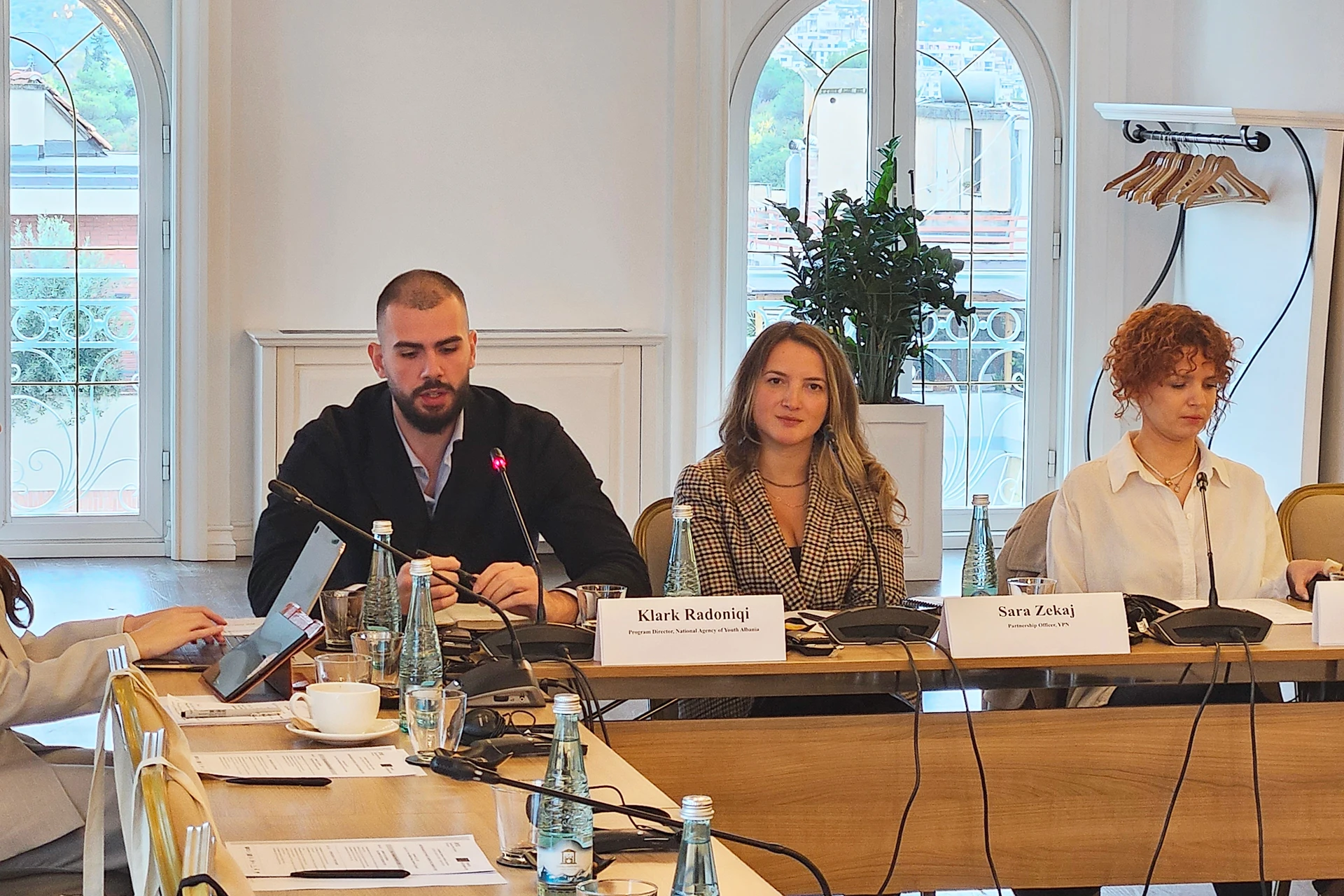
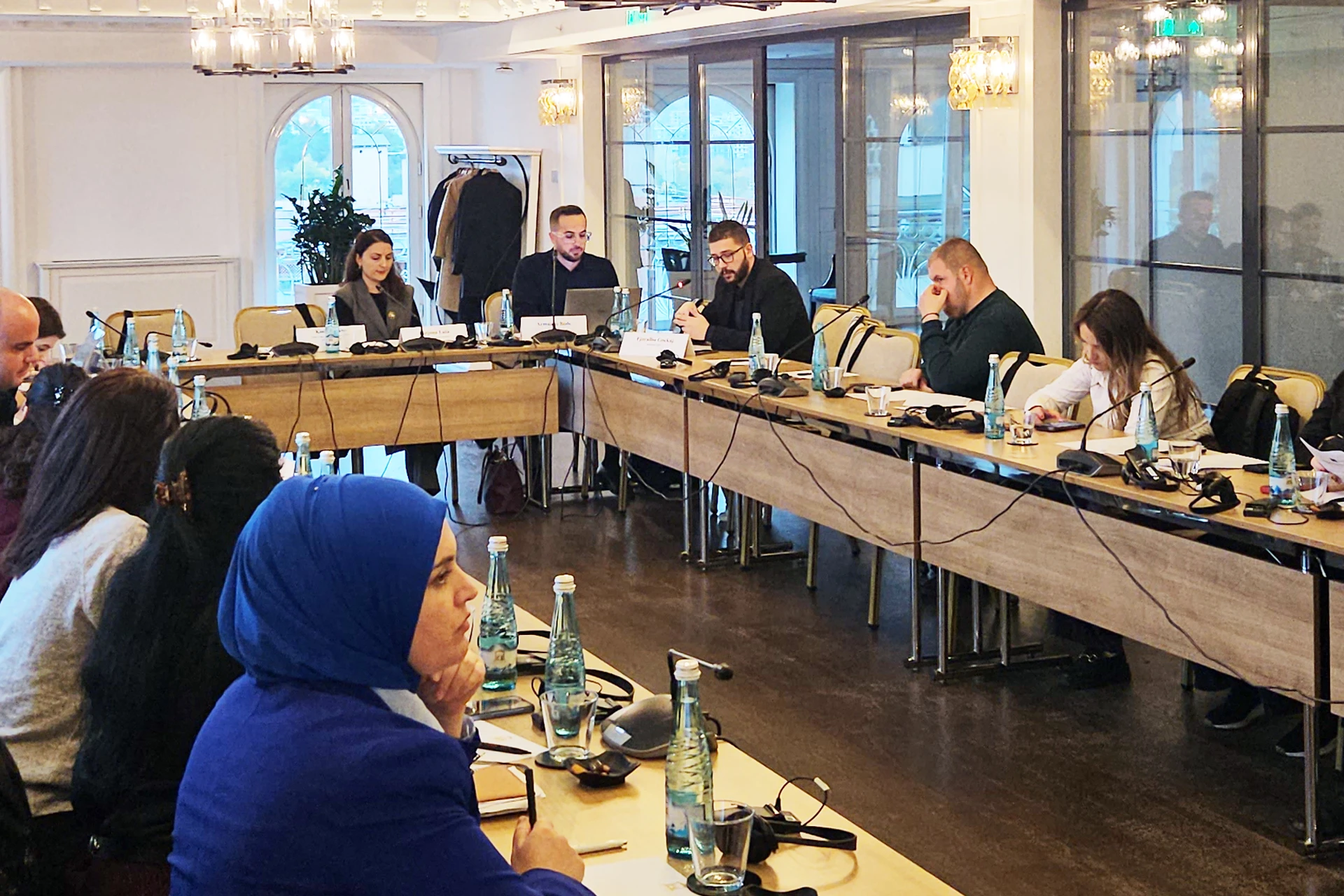
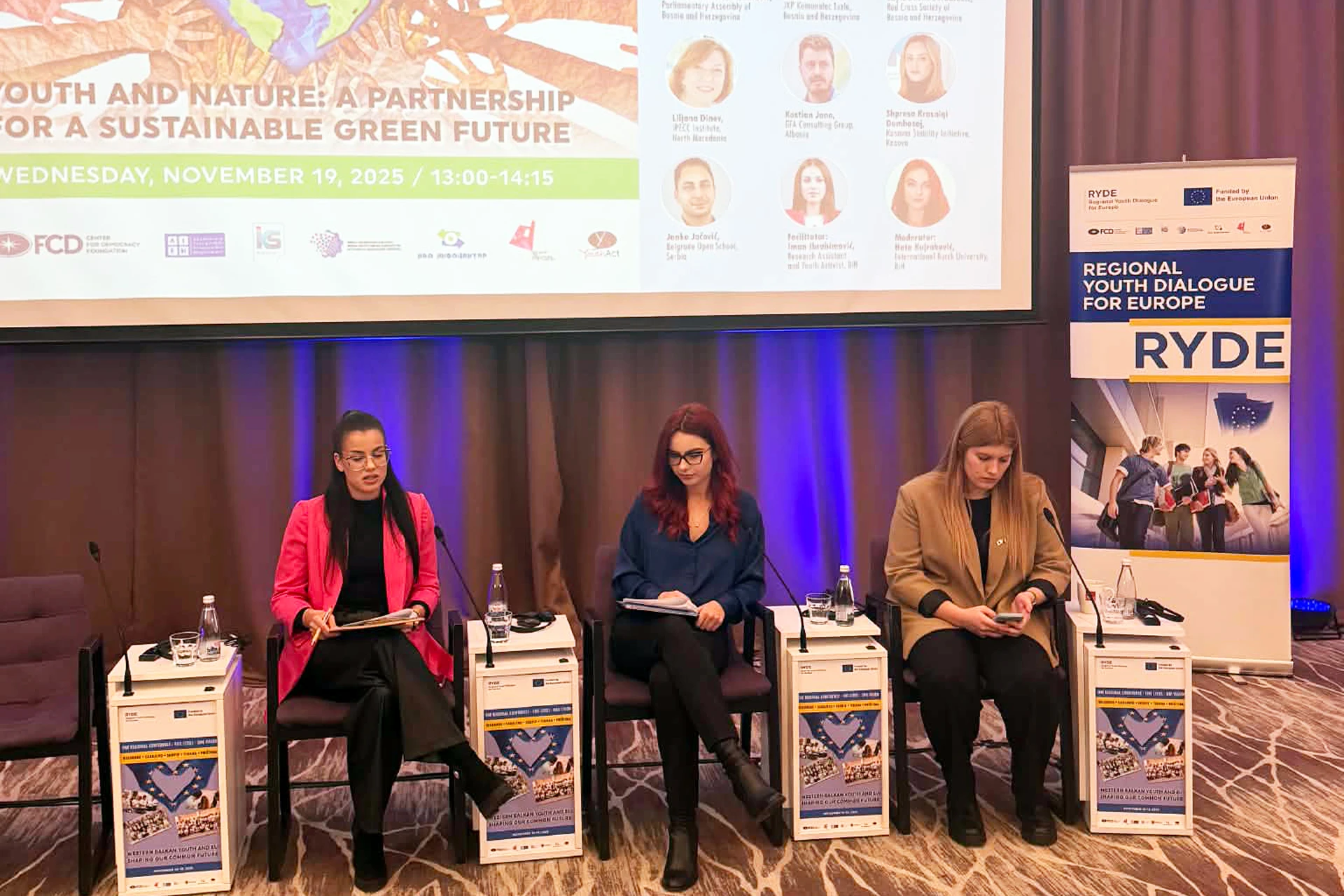
Panel V – Youth and Nature: A Partnership for a Sustainable Green Future
Coordinator: Network of Progressive Initiatives, Bosnia and Herzegovina
Moderator: Hata Kujraković, Projects and Research Office, International Burch University, BiH
Facilitator: Iman Ibrahimović, Research Assistant and Youth Activist, Bosnia and Herzegovina
Panelists:
- Ermina Salkičević-Dizdarević, Member of the Parliamentary Assembly of Bosnia and Herzegovina
- Amela Jusufović, Master of Applied biology – Landfill Manager at JKP Komunalac Tuzla
- Layla Jusko Serdarević, Project Coordinator, Disaster Preparedness and Climate Action Adaptation, Red Cross Society of Bosnia and Herzegovina
- Liljana Dinev, IPECC – Institute for Good Governance and Policies in Environment and Climate Change, North Macedonia
- Kostian Jano, Junior Project Manager for Western Balkans, GFA Consulting Group, Albania
- Shpresa Krasniqi Demhasaj, Project Coordinator, Kosovar Stability Initiative
- Janko Jaćović, Belgrade Open School
- Sofija Petrović, Green Policy Expert, Serbia
- Presentation of the project „Empowering Youth to Advocate for Green Future” by the Foundation BFPE for a Responsible Society from Belgrade supported within the RYDE project
RECOMMENDATIONS:
- Meaningful youth involvement in policy-making, including youth advisory bodies within ministries and municipalities.
- A regional Green Youth Hub Western Balkans to facilitate networking, learning, and small grants for local initiatives.
- Integration of green skills into formal and non-formal education across the region.
- Simplified access to EU and national funding for youth-led green initiatives.
- A just and inclusive transition, ensuring rural and marginalized youth are not left behind.
- Promotion of a culture of sustainability through arts, media, and youth-led campaigns.
Presentation Grantees and Informal Groups Supported under the RYDE Project
- Matea Trajković, Center for Democracy Foundation, Serbia
- Jelena Ružić, Women’s Association of Kolubara Region, Serbia
- Alba Cela, Albanian Institute for International Studies, Albania
- Joana Rista, Beyond Barriers Association, Albania
- Aleksandar Šljuka, New Social Initiative, Kosovo
- Ivan Jovanov, Association Leaders for Education, Activism and Development, N. Macedonia
- Staniša Stankovik, Informal groups The Diversity Youth and GenWB
- Anxhela Omeri, Informal group EmpowerArt Balkans
- Mihajlo Mitić, Informal group Opportunity RYDErs
The Regional Youth Dialogue for Europe Project is implementing by the Center for Democracy Foundation (CDF), Belgrade (as project coordinator) and partner organizations: Academy of European Integration and Negotiations from Tirana (AIEN); Kosovo Stability Initiative from Pristina (IKS); Association Network of Progressive Initiatives from Sarajevo (NPI); NGO Info Center from Skopje (NGO IC); Regional Academy for Democratic Development from Novi Sad (ADD); Youth Act Center from Tirana (YA).
Project is funded by the European Union.