Regional Youth Dialogue for Europe – RYDE
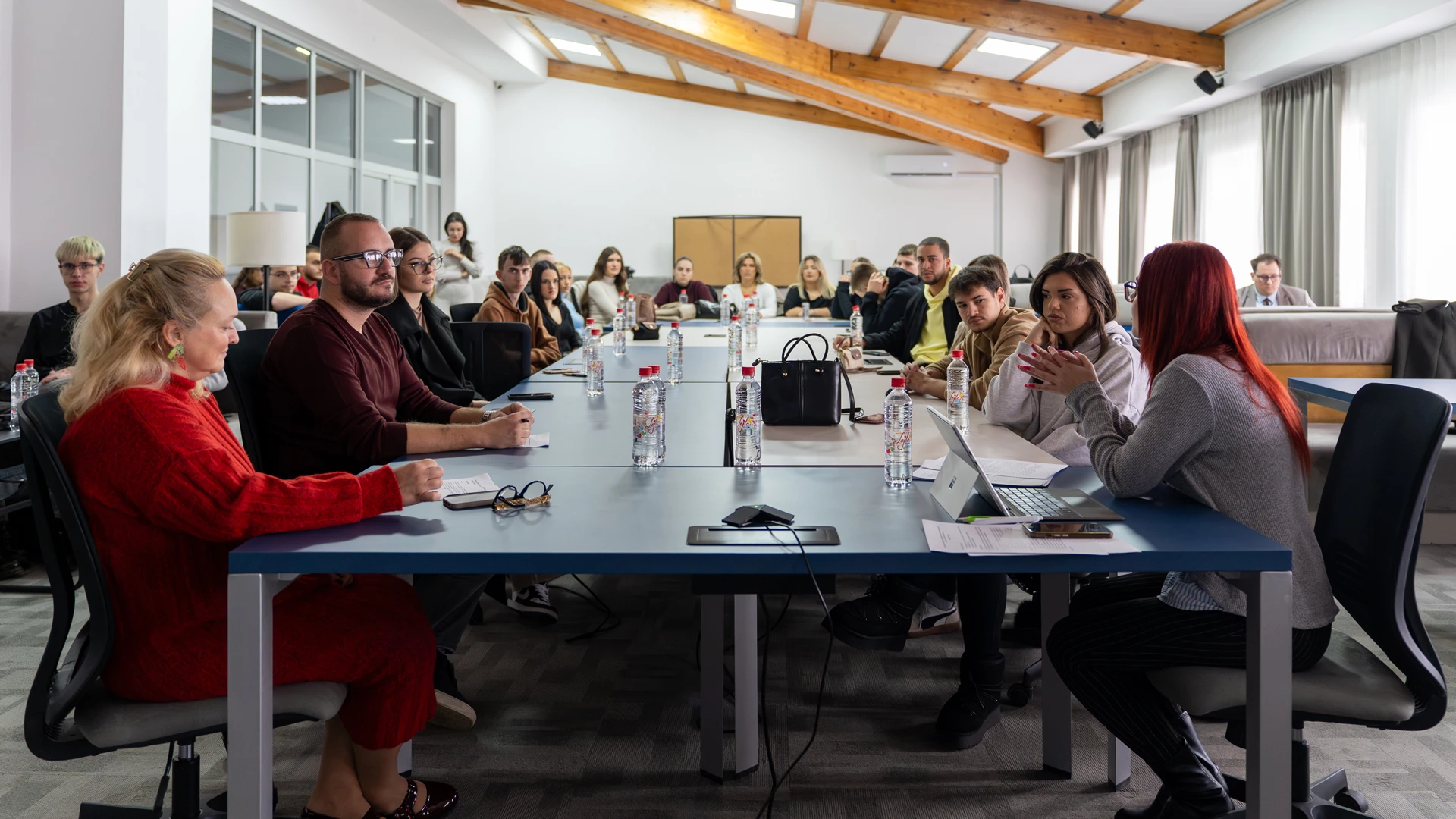
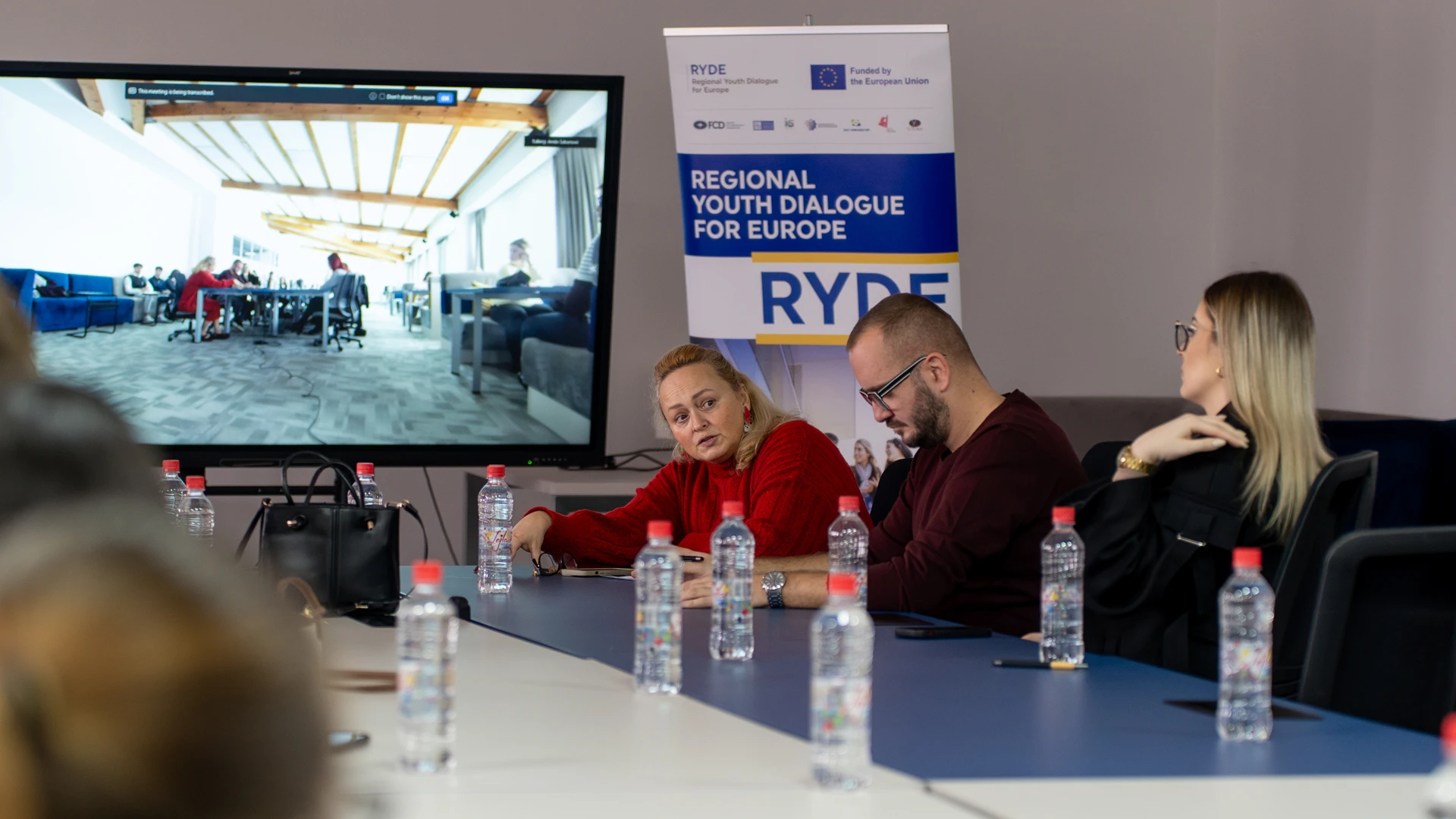
Within the framework of the project “Regional Youth Dialogue for Europe – RYDE”, funded by the European Union, the Network of Progressive Initiatives from Sarajevo (NPI) organised a public debate on 15 December 2025 at the premises of International Burch University on the topic “Youth Employment, Financial Literacy, and Entrepreneurship – From Awareness to Concrete Policy Measures.”
The public discussion featured prof. dr Lejla Ramić Mesihović and assist. prof. dr Adem Olovčić, and was moderated by Hata Kujraković. The debate, which gathered more than 50 participants, was interactive and dynamic, with active student engagement throughout the entire event.
The discussion highlighted that youth-related challenges in Bosnia and Herzegovina cannot be addressed through isolated interventions. Employment, financial literacy, and entrepreneurship emerged as interconnected policy areas that require coordinated and long-term approaches rather than short-term or project-based solutions.
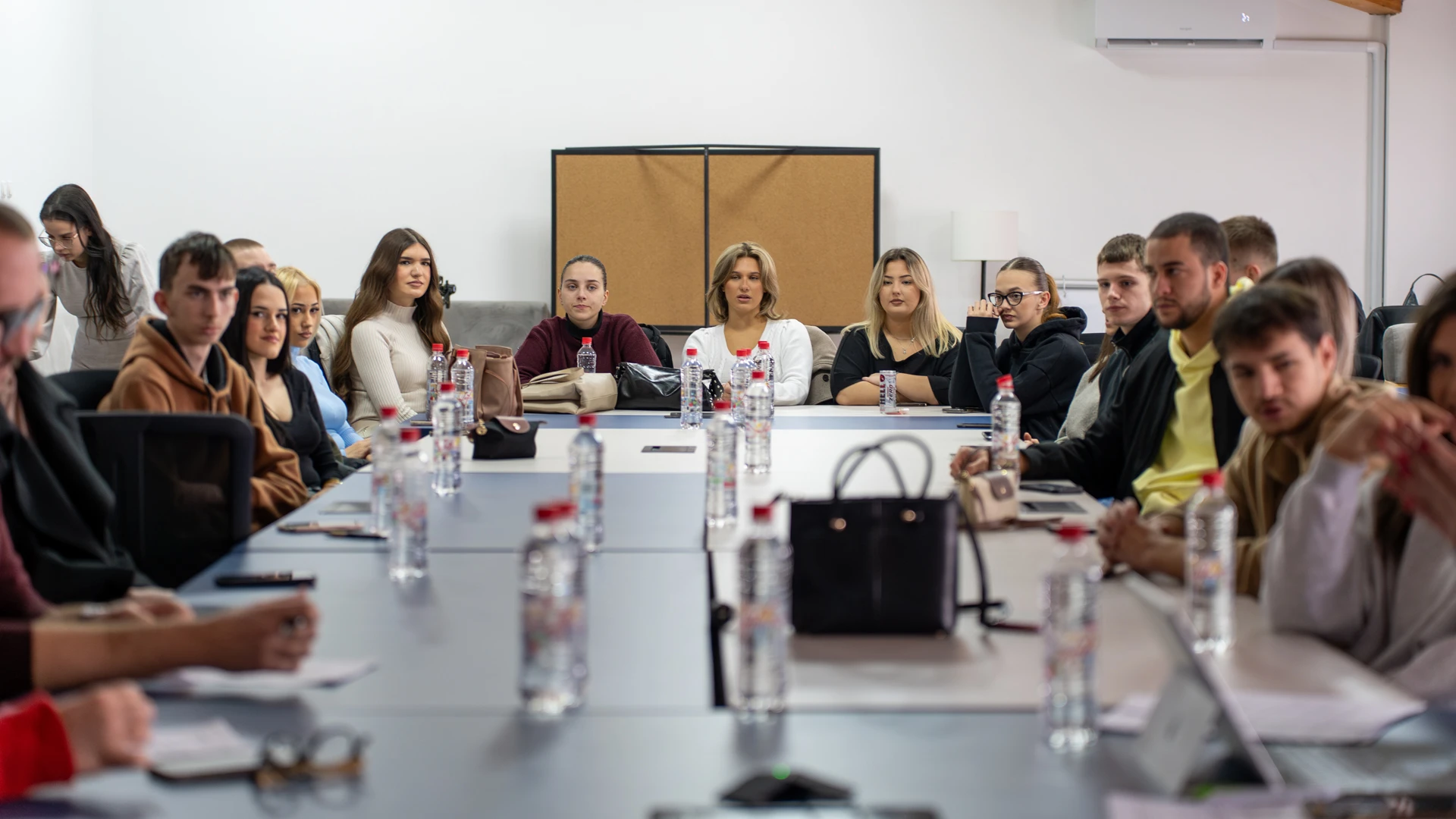
When it comes to employment, participants emphasised that focusing solely on unemployment rates masks deeper structural problems. Young people are often employed in temporary, part- time, or informal jobs that do not correspond to their level of education or skills. This results in underemployment, insecurity, and delayed independence. The discussion underscored the importance of shifting policy focus toward quality employment, strengthening career guidance, and improving the transition from education to the labour market. The Youth Guarantee was repeatedly referenced as a useful framework, particularly for its emphasis on early intervention and coordination between institutions, even though Bosnia and Herzegovina currently lacks a systematic and institutionalised model.
Financial literacy was recognised as a critical yet underdeveloped component of youth empowerment. Participants stressed that financial skills are largely shaped by family background, leading to unequal starting positions among young people. Without adequate financial knowledge, even those who are employed struggle to manage unstable income, plan for the future, or consider entrepreneurship. The discussion highlighted the need for systematic financial education, integrated into formal education and supported by public institutions, rather than relying on one-off workshops or donor-driven initiatives.
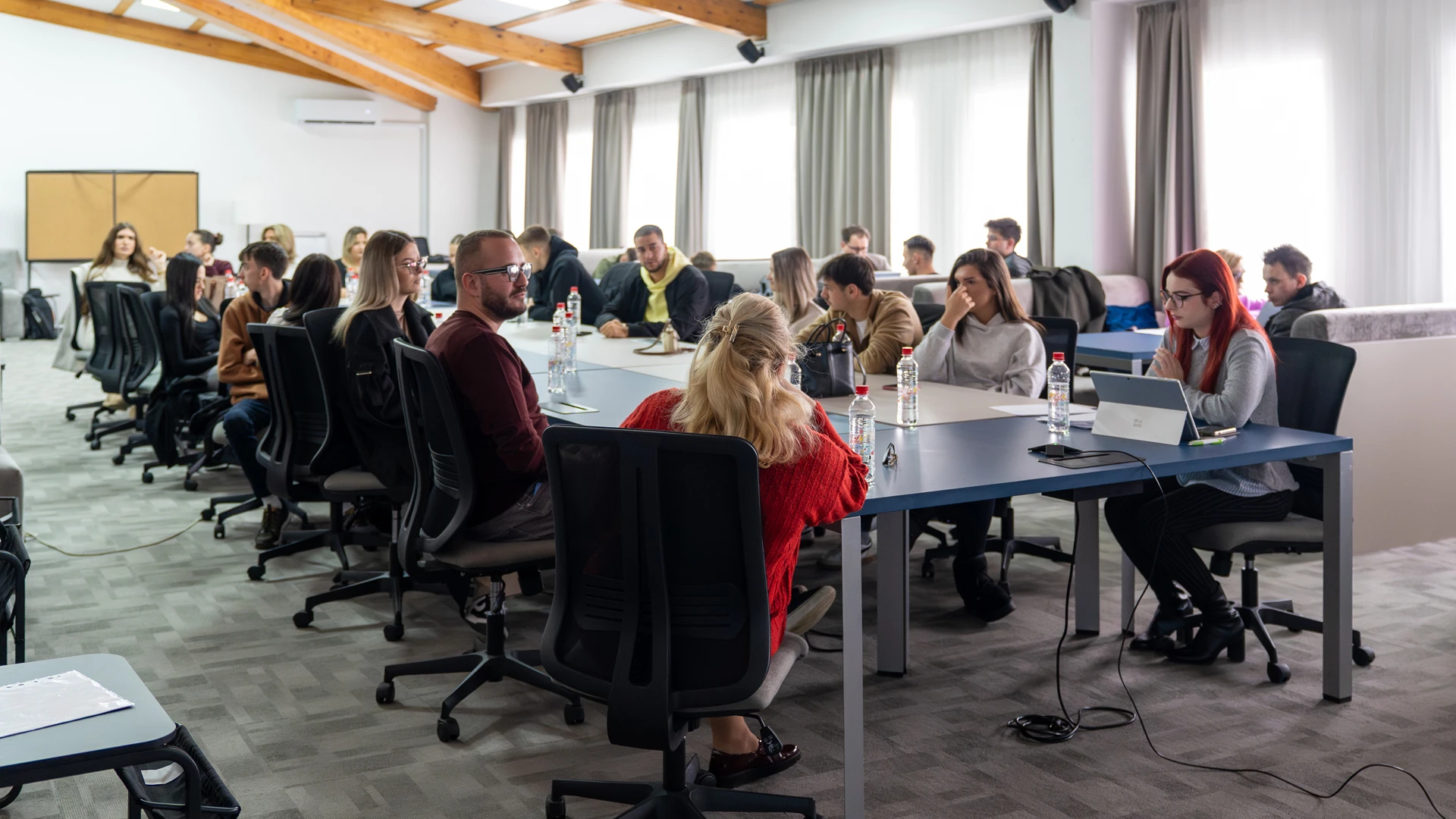

Entrepreneurship was discussed both as an opportunity and a challenge. While Bosnia and Herzegovina shows strong early-stage entrepreneurial activity, participants pointed out that many young people turn to entrepreneurship out of necessity rather than choice. Fear of failure, lack of mentorship, administrative complexity, and limited access to finance were identified as major barriers. The discussion emphasised the importance of building supportive entrepreneurial ecosystems, including mentoring, peer networks, incubation programmes, and policies that normalise experimentation and learning from failure.
Across all themes, participants highlighted the need for better policy coordination across levels of government and sectors. Youth policies, employment strategies, education reforms, and economic development measures must be aligned to ensure coherence and long-term impact. Importantly, students stressed that young people should not be treated merely as beneficiaries but as active contributors to policy design, implementation, and evaluation.
Network of Progressive Initiatives (NPI)
The Regional Youth Dialogue for Europe Project is implementing by the Center for Democracy Foundation (CDF), Belgrade (as project coordinator) and partner organizations: Academy of European Integration and Negotiations from Tirana (AIEN); Kosovo Stability Initiative from Pristina (IKS); Association Network of Progressive Initiatives from Sarajevo (NPI); NGO Info Center from Skopje (NGO IC); Regional Academy for Democratic Development from Novi Sad (ADD); Youth Act Center from Tirana (YA). The project is funded by the European Union.
Regional Youth Dialogue for Europe – RYDE
Project is funded by the European Union.