“He Will Live Forever Through His Works and Our Memories”
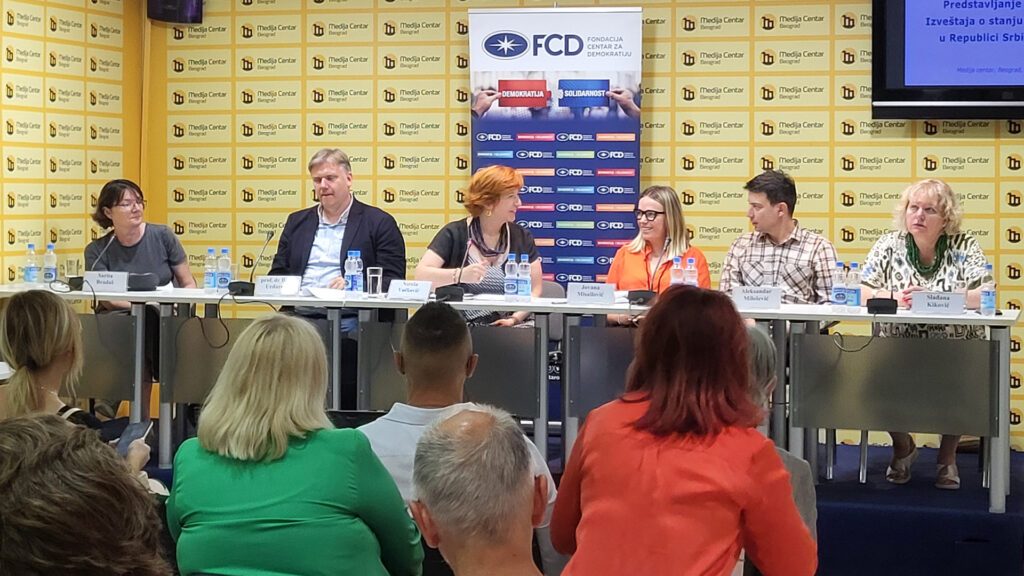
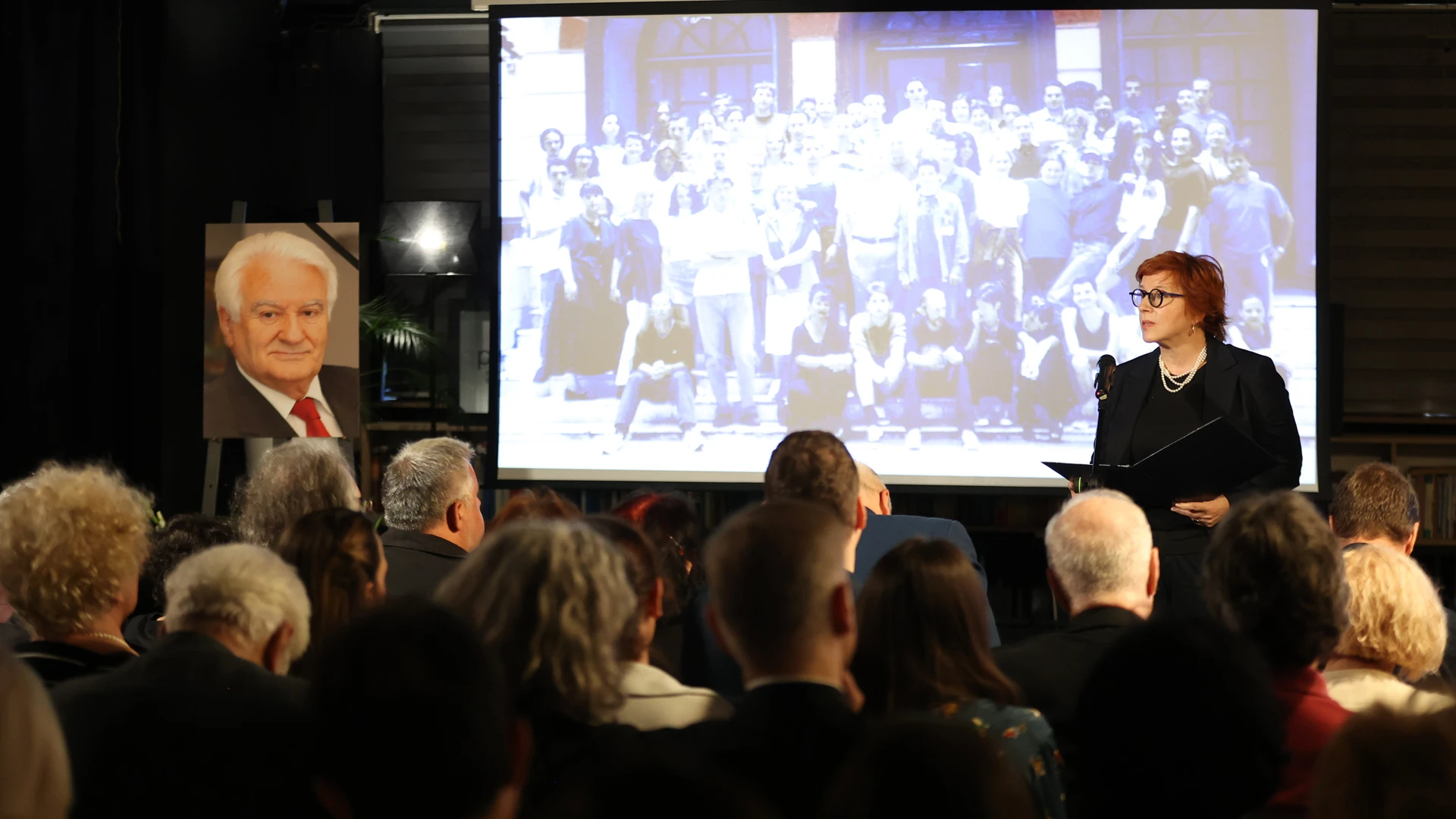
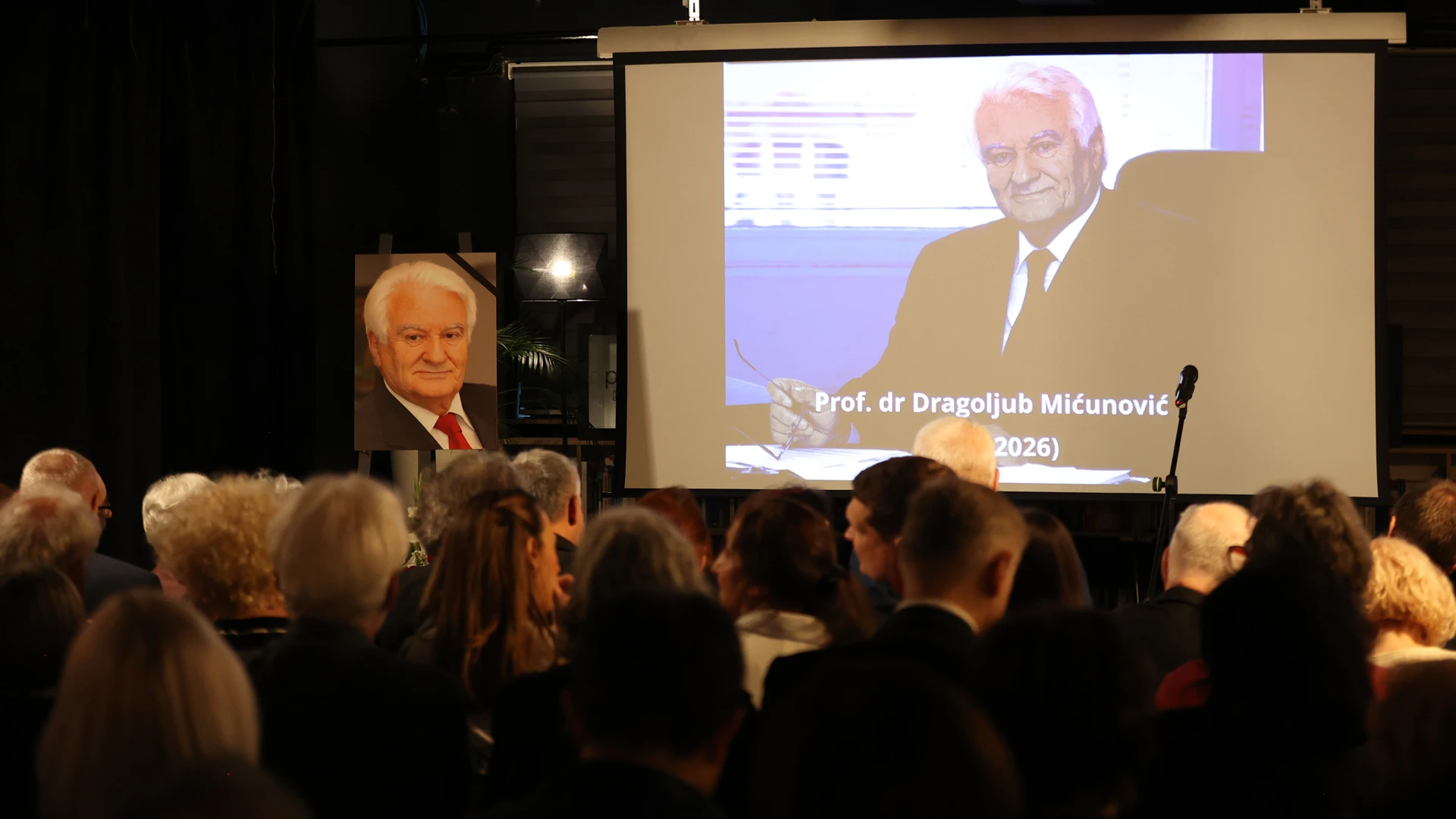
A memorial for Dragoljub Mićunović, an exceptional professor, philosopher, intellectual, uncompromising advocate of democracy and freedom at a time when democracy did not exist in our country, and a kind and warm-hearted man of inexhaustible energy and unwavering faith in a better future, was organized at the Miljenko Dereta Space in Belgrade by the Center for Democracy Foundation, of which he was the founder and president.
Speech by Nataša Vučković at the commemoration of Prof. Dr. Dragoljub Mićunović (Belgrade, May 29, 2026):
 “Everyone has their own view of Mićun, shaped by authentic experience and time spent with him. I came to know and follow Mićun over the course of 36 years long cooperation – in the Democratic Party, in the National Assembly, in parliamentary delegations, and, for the past 32 years, at the Center for Democracy.
Until the age of sixty, Mićun lived a relatively relaxed life as an intellectual and dissident. Although he had long been involved in politics, his election as President of the Democratic Party in 1990 marked the beginning of a new profession – politics – which imposed greater discipline on daily life and required changes in habits. Some of these changes he accepted with ease. Until then, always dressed in a sweater and jeans – or at least that is what photographs from that earlier period show – he only began wearing suits when he was already sixty years old. He enjoyed this change and increasingly liked to show off his new, elegant ties. Toward some newly imposed obligations, however, he displayed considerable resistance. In 1992, Zoran Đinđić arranged the first bodyguards for the two of them – without success. For Mićun, being followed and monitored in any form was a restriction of freedom and reminded him of police surveillance. He was constantly devising all sorts of ways to slip away from them, outsmart them, and evade them, only to sneak up behind them and joke around.
When he was elected President of the Federal Assembly of the FR Yugoslavia in October 2000, there was no trace left of the disorganized and undisciplined Mićun. As if he had always held a high state office, he knew every secret of the craft and protocol, and from then on he was never late for a meeting.
Mićun was, as we all know, an outstanding speaker. He never wrote down his speeches; sometimes he would sketch a few key points, and then deliver them in a single breath. I regret that many of them were never recorded.
Mićun’s curiosity knew no bounds. He continuously expanded his broad, encyclopedic knowledge, exploring new topics and discovering new authors. He especially enjoyed the moments when he and Natalija engaged in philosophical discussions and conversations about new books, which she had followed much more regularly in recent years.
If he gave you a book to read that he had already read and, as he would say, “plowed through,” it was a particular delight – to read a book accompanied by his comments, questions, expressions of agreement or disagreement, generously penciled into the margins. It was like reading two books at once!
Progressiveness and a passionate resistance to everything rigid and conservative colored so many of his speeches and articles. He was not a nationalist, but he understood what the state meant. His identity was woven from Serbian, Montenegrin, Toplica region, Yugoslav, and European threads. He had friends throughout the region and across Europe. He loved Yugoslavia and could never understand why people preferred living in a small country rather than a large one.
For Mićun, freedom had no limits except the freedom of others. He was a sincere advocate of gender equality and understood the challenges women face in society. He was proud of his text “A Male Crime and an Apology.” He was a man of the left, sensitive to social inequalities. He spoke passionately against the unlimited accumulation of wealth by individuals in our time, against selfish individualism, the decline in the quality of education and healthcare, and the absence of solidarity.
And unlike almost all of our politicians, Mićun was a man of culture: he had an excellent knowledge of classical music, he read and wrote poetry, and he regularly attended the theatre. He had been looking forward to seeing the new production of The Dresser this May – but sadly, that wish was not fulfilled. He wanted to see everything that could be seen. He always included museum visits in the programs of his diplomatic trips abroad, something uncommon for our delegations. Unlike many people of his generation, he readily embraced new technological innovations and approached every new smartphone or software application with enthusiasm. He never missed opportunities to meet with young people, talk with them, and mentor them. His erudition never prevented him from conveying knowledge to younger generations with remarkable skill in a way that was both understandable and engaging. In his lectures at Politeia on democratic institutions and procedures, he skillfully combined modern theories with examples from antique Greece, vividly portraying ancient heroes and their dialogues. An entire generation of young people benefited over the past decades from his support and friendship – Miloš Smiljanić, Marko Eloriaga, Alisa Marić, Andreja Trajković, Vuk Vuksanović, Višnja Mićunović, Stefan Milivojević, and now his son Dimitrije, to mention only some among them.

Mićun was always approachable in his interactions with people. Passers-by on the street would always call out “Mićune” and greet him warmly, as though he were a close acquaintance. In his relationships with colleagues, Mićun did not establish hierarchical barriers. He was always willing to talk with everyone, eager to hear their opinions, and became friends with many of them. Every time he came into our office, he brought cheerfulness and a wealth of stories and anecdotes. He always approached people with goodwill and a smile. He understood people and their weaknesses, forgave many small and great betrayals, was loyal and generous in friendship, and entertained us endlessly with his sense of humor and his jokes.
Mićun always viewed politics as a collective endeavor. The political parties he led were, in his eyes, communities of friends and comrades-in-struggle rather than gatherings of competitors, although he was of course fully aware of how important individual ambitions are as drivers of political action. In advocating democratic procedures, he often quoted Jefferson’s phrase that “compromise is the strategy of democracy,” yet he fought for democracy uncompromisingly, with immense personal courage.
I do not know how much of his courage and optimism he drew from everything he endured in his youth, and how much from the immense love of his parents, especially his mother Kosa, that strong pillar of his childhood, adolescence, and youth. Once, when we asked him why he thought people who had survived prison camps often lived long lives afterward, he replied: “I think it is because we no longer have fears. Life is woven from fears. When, as a young person, you go through the horrors of a prison camp and survive them, you live without fear.”
To us, his colleagues and friends, Mićun’s works, speeches, and countless memories of his stories and advice remain as guideposts in these times. They also remain as a legacy in the struggle for democracy. He will live forever through his works and our memories.”
Nataša Vučković