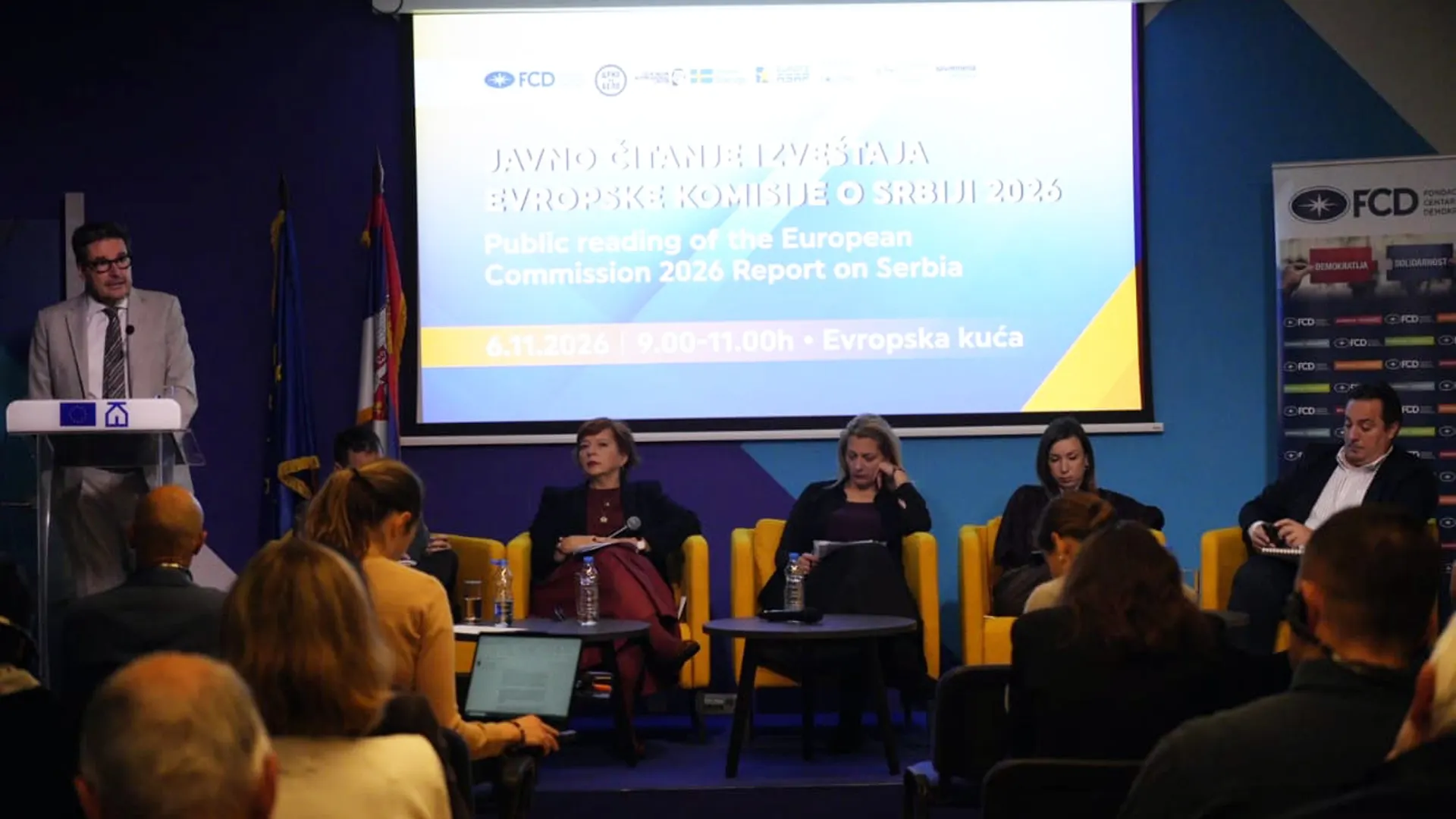
Traditional “Public Reading of the European Commission Report on Serbia 2026”
There is a real opportunity to “restart” the European integration process, it was assessed at an event organised by the Center for Democracy Foundation and the Centre for Contemporary Politics.
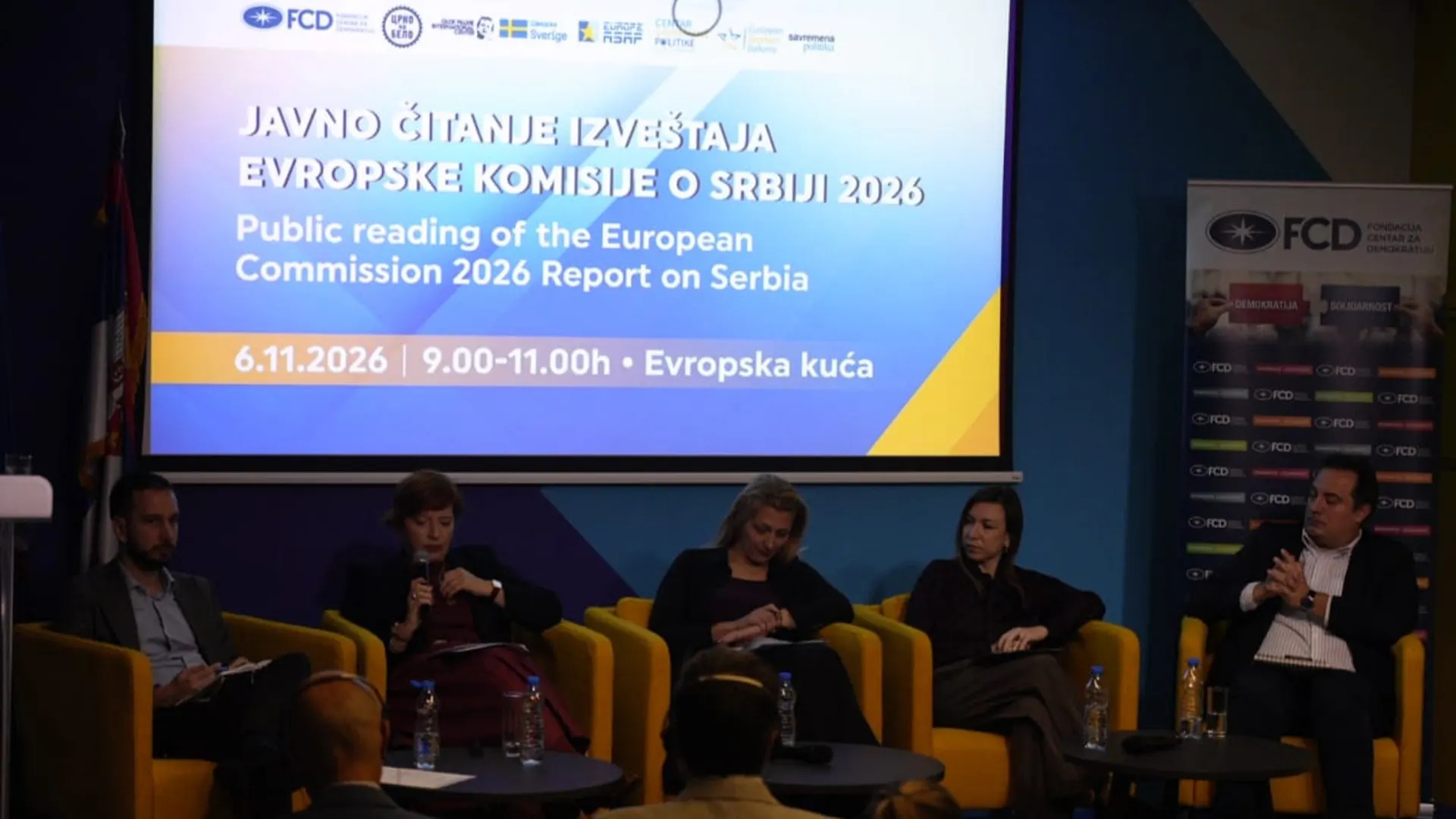
The European Commission’s assessments and sharp criticism of Serbia provide an extremely important roadmap for the new government, as they clearly identify the key areas where reforms need to be implemented as soon as possible in order to finally “unfreeze” the country’s path towards the EU after years of stagnation, participants at the “Public Reading of the European Commission Report on Serbia 2026” stated. The event was held for the eleventh consecutive year, organised by the Centre for Contemporary Politics and the Center for Democracy Foundation.
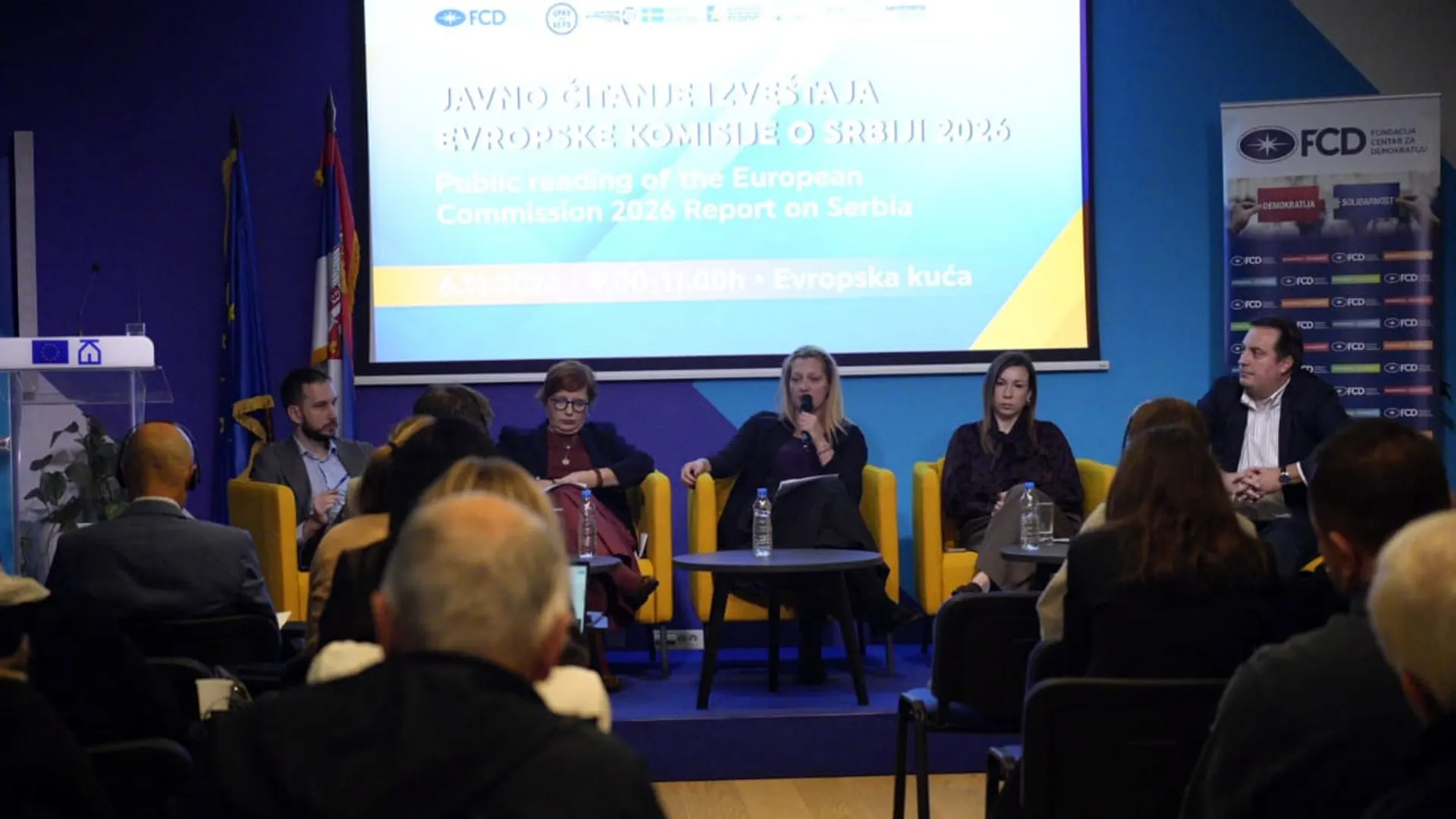
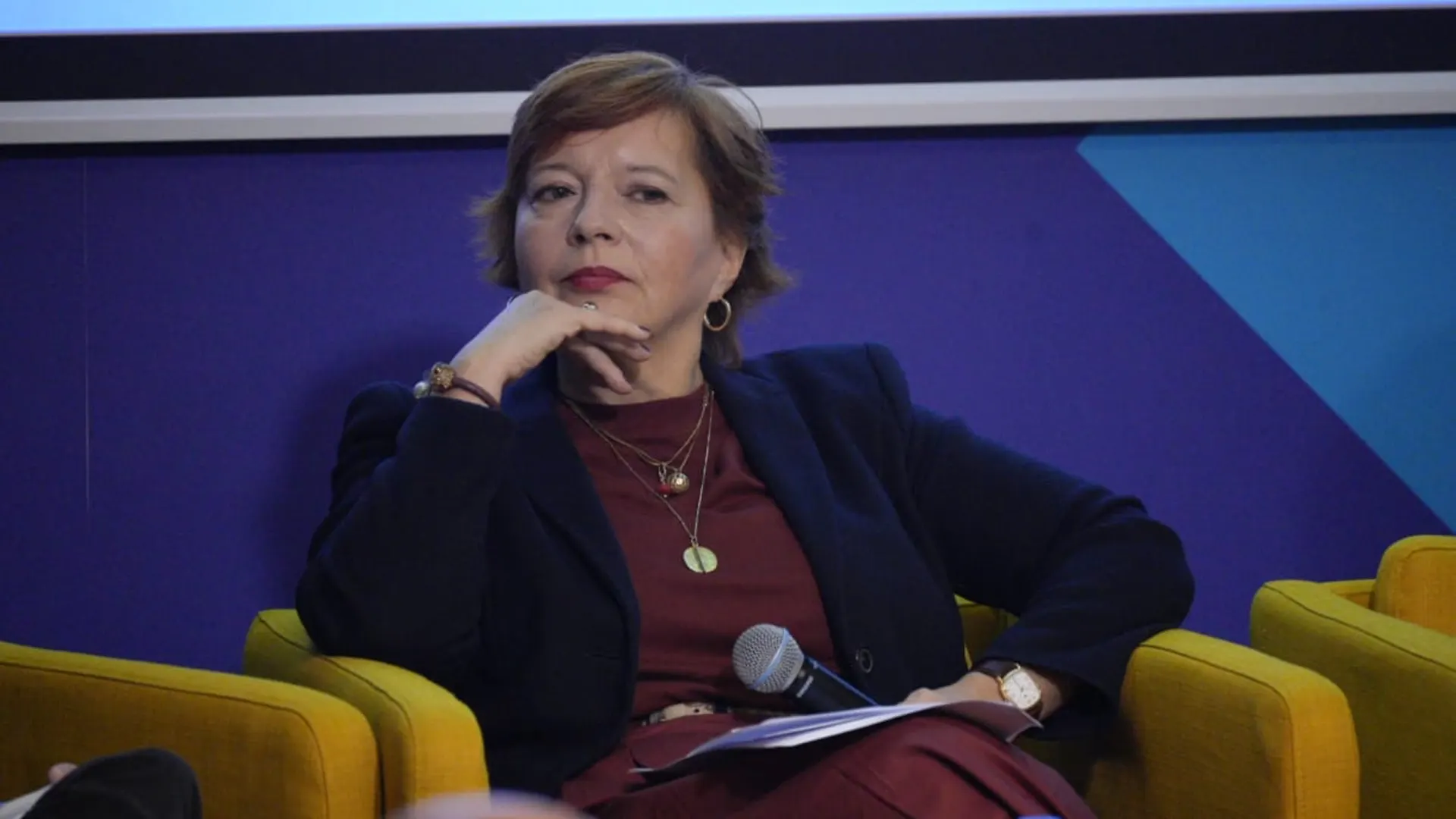
The public reading of the EC Report brought together Julian Vassallo, Deputy Head of Delegation of the European Union to Serbia; Nataša Vučković, Center for Democracy Foundation (CDF); Bojana Selaković, National Convention on the European Union (NCEU); Jovana Spremo, Lawyers’ Committee for Human Rights (YUCOM); Marko Savković, ISAC Fund; and Nikola Burazer, Centre for Contemporary Politics (CSP).
Citizens Have Shown That They Care About Serbia Upholding the Values on Which the EU Is Founded
Nataša Vučković, Secretary General of the Center for Democracy Foundation, pointed out that the EC Reports on Serbia had become “increasingly serious and negative” year after year, reflecting the attitude of the outgoing government towards both the European Union and its own citizens.
“Citizens were repeatedly told that the EU did not want us, while the continuation of Serbia’s European path was reduced solely to geopolitics, namely relations with Kosovo and Russia, while the implementation of reforms was pushed to the margins. As a result, citizens lost sight of why we had embarked on the European path in the first place. However, when protests began in Serbia, and also in the recent elections, citizens demonstrated that they care about Serbia upholding the values on which the EU is founded, including the fight against corruption, the establishment of the rule of law and freedom of expression,” Vučković stated.
Nataša Vučković emphasised that “reforms are not something we need in order to satisfy Brussels, but are essential for improving citizens’ lives, and citizens’ perceptions are the same as the European Commission’s assessments.”
Damage Caused by the Former Government Documented, Lack of Progress on the Fundamentals
According to Nikola Burazer, Programme Director of the Centre for Contemporary Politics, the 2026 EC Report on Serbia can be interpreted as both “the most important and the least important” report so far. It is “the most important” because, among other things, it identifies backsliding in as many as four areas and represents “homework” for the new government, while it is “the least important” because “the government that brought us to this point is on its way out”.
“All the damage caused by the former government has been listed, along with what needs to be done. Although formally called a Progress Report, it essentially identifies backsliding, so it is fortunate that the new government has the political will to tackle difficult tasks. Therefore, it is possible that next year we may even be talking about progress,” Burazer stated, identifying freedom of expression as a “particularly alarming area” in the Report.
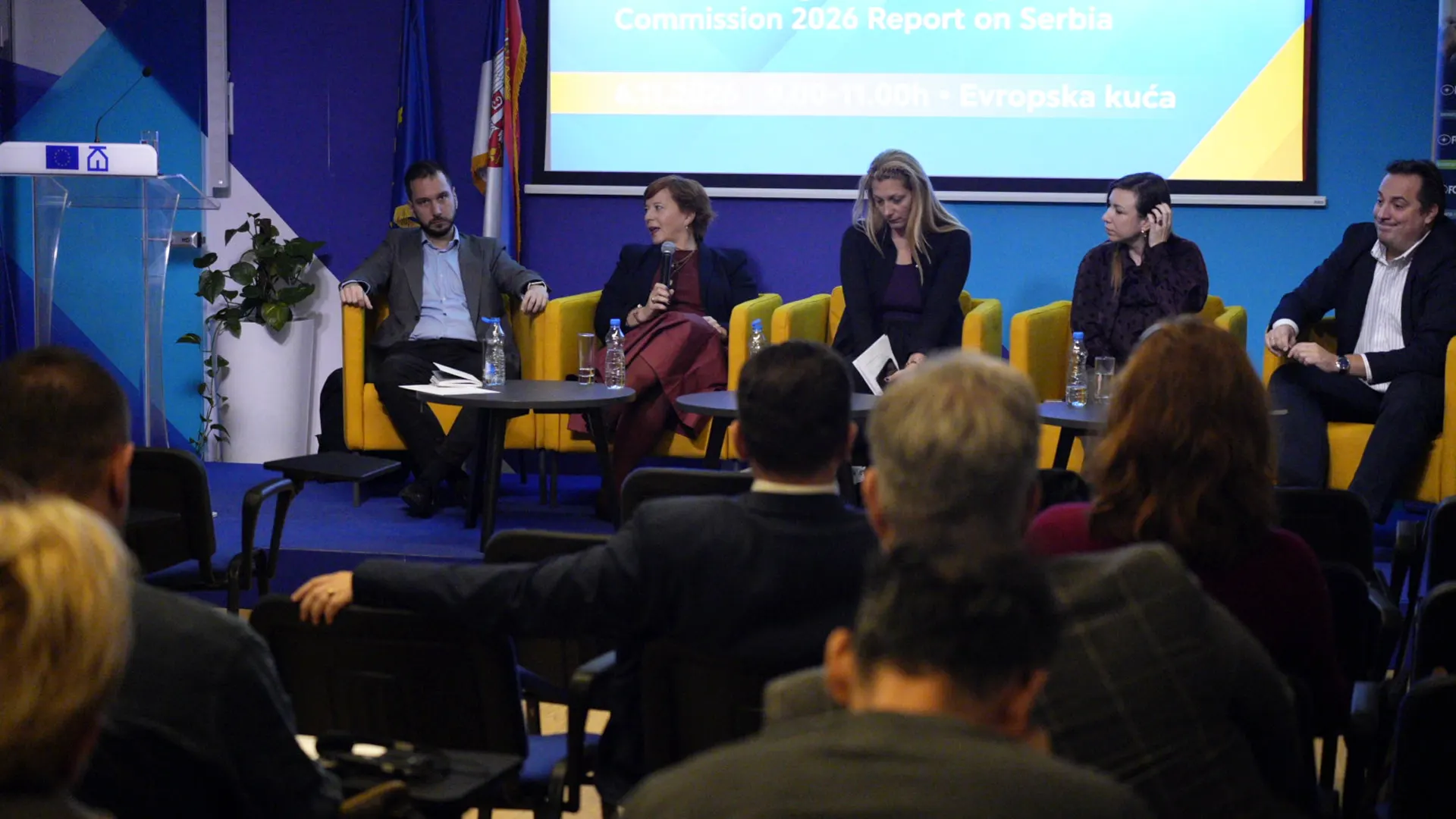
Julian Vassallo, Deputy Head of Delegation of the European Union to Serbia, noted that civil society had ensured that the Report, which is “more than a report, it is a matter of democratic accountability”, entered the public sphere when this could not be done in parliament.
“Accession negotiations are not merely a technical matter between Belgrade and Brussels, but represent an opportunity for reforms and for restoring citizens’ trust in institutions. Citizens want the fight against corruption, the rule of law, media freedom… Citizens and the Union have the same expectations. The opportunity is real, but that is not enough; what matters is what we do,” Vassallo emphasised.
He stressed that there had been some alignment in terms of meeting technical criteria, but that “progress in certain areas cannot compensate for the lack of progress on the fundamentals”.
Restoring Trust in Institutions Is Essential, Relations with Russia Remain a Sensitive Issue
Jovana Spremo, Advocacy Director of the Lawyers’ Committee for Human Rights (YUCOM), agreed that restoring citizens’ trust in institutions was essential.
“Among other things, we need to give institutions the opportunity to demonstrate how they function when there is no pressure. The EC Report is a diagnosis, a starting point that all three branches of government should carefully examine and consider what needs to be done. Enormous pressure on judges and prosecutors has been documented, as well as deliberate obstruction and sabotage of the judiciary by the executive, including efforts to prevent, above all, the Prosecutor’s Office for Organised Crime from doing its job. We succeeded in ensuring that harmful legislative amendments were removed, but this does not mean that there is not still considerable room for improving the independence and efficiency of the judiciary,” Spremo stated.
As priorities for the new government in the area of the rule of law, Jovana Spremo identified establishing accountability for systemic corruption and the misuse of public resources, investigating the collapse of the canopy in Novi Sad, conducting financial investigations and confiscating assets acquired through criminal activity, as well as “reforming the judiciary so that it can truly describe itself as independent”, and ensuring that “every citizen has equal access to justice”.
Commenting on the European Commission’s assessments concerning alignment with the Union’s Common Foreign and Security Policy, Marko Savković, Senior Adviser at the International and Security Affairs Centre (ISAC Fund), stated that the situation had been poor in recent years, as Serbia’s alignment rate had fallen from 67 per cent to 63 per cent over the past year.
“Serbia had a practice of retroactive alignment, while failing to align with the EU on issues concerning Russia, China and Belarus. The problem of technical dependence on third countries was also highlighted, including the procurement of Chinese supersonic missiles, the granting of citizenship to Russian nationals through expedited procedures, and dependence on Russian gas… Therefore, relations with Russia remain a very sensitive issue, and the new government faces numerous challenges. As for Kosovo, what was signed in Ohrid in 2023 remains legally binding,” Savković pointed out.
Bojana Selaković, Coordinator of the National Convention on the European Union, assessed that there was a kind of cosmic justice in the fact that the EC Report had “appeared at this very moment”, as a government that had only declaratively supported Serbia’s EU membership was leaving office, having attempted to blame civil society for the blockage of the accession process.
“Now is the opportunity to reset many things. Civil society has been the only actor that has genuinely advocated Serbia’s European path over these 14 years, without any hidden agendas. The outgoing government captured the European integration process. It is important that the EU does not now place on the new government everything it was unable to resolve with the outgoing government, that democracy is revitalised, foundations are established and mechanisms strengthened to ensure that no future government can ever again capture institutions and the European path,” Selaković noted.
The “Public Reading of the European Commission Report on Serbia 2026” was held with the support of the Olof Palme International Center.
At the traditional public reading of the Report, organised by the Center for Democracy Foundation and the Centre for Contemporary Politics, the European Commission’s most important findings across different areas are presented, the Serbia Report is compared with reports on other Western Balkan countries, and civil society organisations that have been committed to Serbia’s European integration for many years provide recommendations for improving reforms and the EU integration process.
Source: Savremena politika, CDF