centaronline.org
 politeia.institute
 crnonabelo.com





For Citizens in Serbia, the Rule of Law, an Independent Judiciary, Security for All, and Equality Before the Law Are Key
Interview with Nataša Vučković for TVP World

Student protests, followed by mass civic protests across the country, indicate that there is very large and widespread dissatisfaction with the current government, and the key demands that the majority of citizens want to see in Serbia are the rule of law, an independent judiciary, a transparent public procurement system, a parliament that is functional and exercises control over the government, security for all citizens, and the equal application of the law to everyone, said Nataša Vučković, Secretary General of the Center for Democracy Foundation, in an interview for TVP World.
The rule of law means that we do not want the corruption that we currently have; we want the authorities to fight corruption. We want an independent judiciary, free from any influence of the executive branch. We want a transparent system of public procurement, in order to enable free competition and thereby ensure transparency in the implementation of construction and all other projects, because otherwise this endangers other citizens.
We want a parliament that is functional and that controls the government. We want there to be control over public spending and the state budget. We also want security for all citizens and the equal application of the law to all citizens, all groups, all companies, etc.
These are therefore the key political reforms that we want to see, and these are the main reasons why there is in fact a slowdown or stagnation in Serbia’s European integration in the process of accession to the EU.

The protests have shown that the number of citizens who are losing fear and deciding to join students in civic movements is growing, and even to give their signatures for early elections. There is great mistrust in institutions among young people, but also among older citizens, because in recent years we have witnessed the weaknesses of institutions, which were in fact overwhelmed and completely controlled by the ruling party. What is important, however, is that we must not underestimate the importance of institutions. Change must come through elections and through institutions, because that is the only way the system functions.

I think that young people, month by month, are managing to understand how important this is and how much knowledge is required in order to participate in elections, conduct an election campaign, ensure election oversight, and successfully carry all of this out. Therefore, this is knowledge management that comes with institutions, organizations, and infrastructure which, in my opinion, can only be provided by organizations such as political parties.
Positive news from the ranks of pro-European opposition parties is that they have recently decided to act together, which is an optimistic and positive development on their part. There is a call for a non-partisan political movement, which is, in a way, justified and understandable in the context of the weakness of the opposition compared to the dominant political party. But at the same time, we must know that elections are usually best conducted and organized by political parties, not only when it comes to presenting candidates, but also in providing election infrastructure, ensuring election observers in order to prevent electoral fraud, and the like. Therefore, there is certainly still much that needs to be considered.
Source: TVP World / CDF, 29 December 2025


PUBLICATIONS
 Manual for Strengthening the Capacities of Local Self-Government Units for the Employability of Waste Pickers
 NCEU Book of Recommendations 2025
 Manual “The Path to Employment: Get to Know Your Rights and Opportunities”
 Challenges for Organising and Collective Bargaining in Care, Administration and Waste collection sectors in Central Eastern European Countries
 Public Policy Proposals – Collective Bargaining (CEECAW)
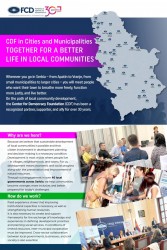 CDF in Cities and Municipalities: Together for a Better Life in Local Communities
 Comparative reports on collective bargaining - CEECAW
 POLITEIA – Regional School for Youth Participation 2025 (leaflet)
 Report on the State of Labour Rights in the Republic of Serbia in 2024
 Unlocking Collective Bargaining Power in Three Sectors: A Call to Action
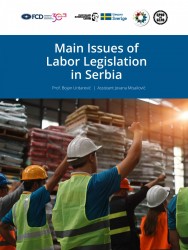 Main Issues of Labor Legislation in Serbia
 New Monitoring Report by the “SDGs for All” Platform: Is the End Goal in Sight?
 NCEU Book of Recommendations 2024 (Summary)
 National reports on collective bargaining in Serbia - CEECAW
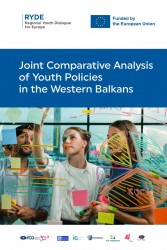 The Comparative Analysis of Youth Policies in the Western Balkans (WB)
 Unlocking Collective Bargaining Power in Three Sectors: A Call to Action
 Western Balkans Youth in Policy Making Processes
 SDGs for All Platform newsletter (December 2023)