Political Pressure on Employees Undermines Labour Rights and Freedom of Choice
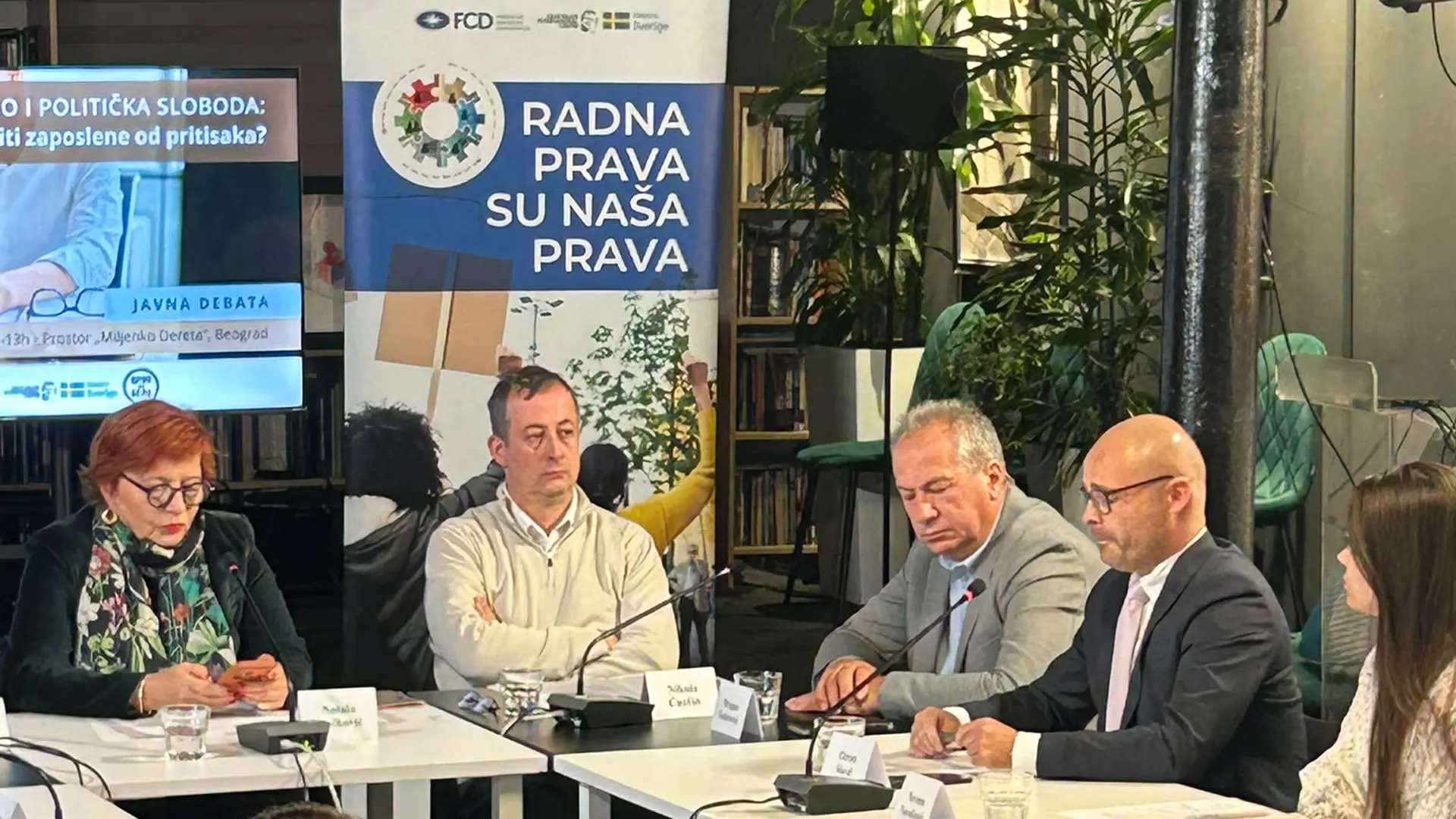
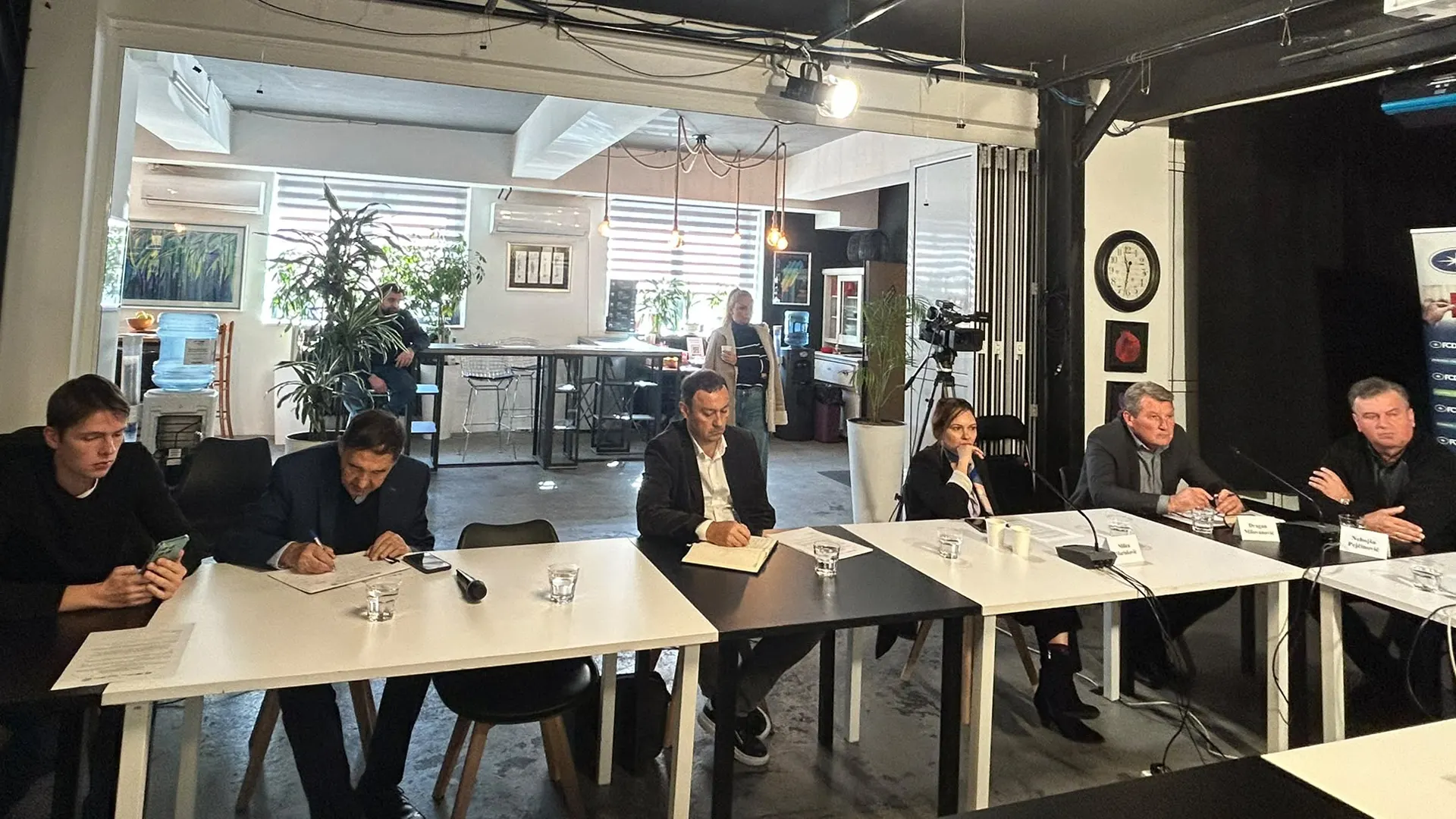
On 16 October 2026, the Center for Democracy Foundation organised a public debate in Belgrade entitled “Work and Political Freedom: Who Protects Employees from Pressure?”. The discussion addressed the mechanisms through which employees are subjected to political coercion, the consequences for their rights, available avenues for protection, and issues of equality, institutional integrity and employer accountability.
Participants in the discussion included Nebojša Pejčinović, NEZAVISNOST Trade Union; Dragan Todorović, Confederation of Autonomous Trade Unions of Serbia; Nikola Ćurčin, Independent Trade Union of Education Workers; Dragan Milovanović, Association of Free and Independent Trade Unions; Ozren Slović, lawyer; Milica Marinković, A11; Nataša Vučković, Center for Democracy Foundation; and others.


It was noted that making access to employment and continued employment conditional on political support undermines both labour rights and fundamental civil and political freedoms. It was emphasised that livelihood security must not depend on political obedience and that pressure on employees also undermines the integrity of the electoral process.
Attention was drawn to demands to attend party rallies and secure “guaranteed votes”, threats of dismissal, transfers and blocked career advancement. It was noted that pressure exists in both the public and private sectors and that, alongside explicit threats, it also takes the form of unspoken expectations and fear of the consequences of refusal. Particular attention was paid to the position of employees in education, state administration and local government, as well as pressure on trade union organising.
It was emphasised that employees with insecure contracts, low wages and limited opportunities to find alternative employment are particularly vulnerable. Their actions, it was stressed, should be understood in the context of their life circumstances and the dependence of entire families on their income, without shifting responsibility onto those subjected to pressure.


Fear of retaliation, difficulties in obtaining evidence, lengthy court proceedings, failure to comply with court rulings and insufficiently effective labour inspection were identified as key barriers to protection. It was stressed that the protection of rights must rest on the work of accountable institutions rather than on individual courage. The importance of collective action, cooperation between trade unions and civil society, and accessible support for employees was also emphasised.
The debate was organised with the support of the Olof Palme International Center, within the project “Labour Rights and Decent Work in Socio-Economic Reforms in Serbia – Black and White”, through which we contribute to greater citizen participation in decision-making and the advancement of socio-economic and labour rights.
Center for Democracy Foundation